
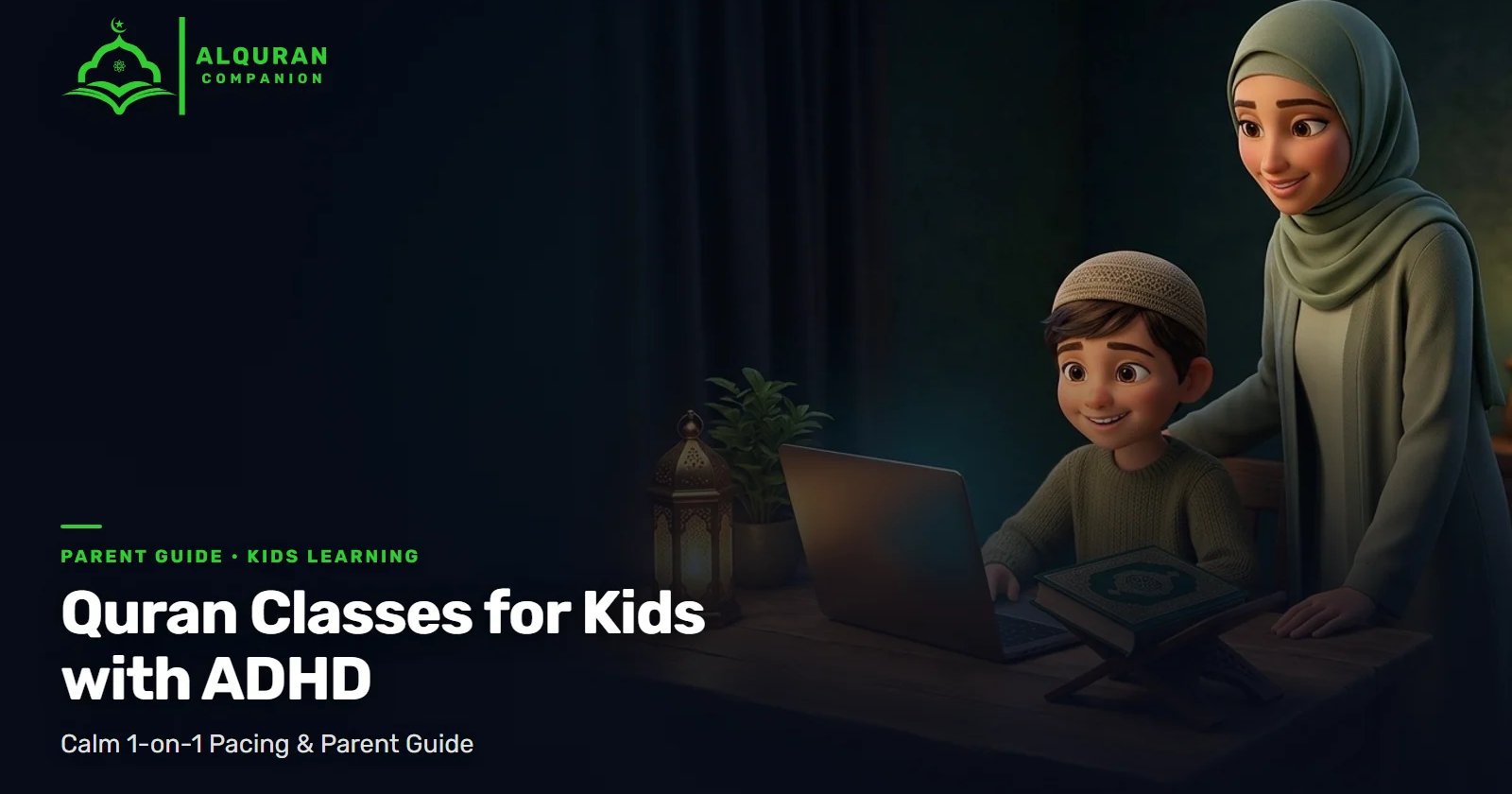
Yes—kids with ADHD and short attention spans often thrive in online Quran classes when lessons shift from crowded 60-minute group halls to calm, adaptive 1-on-1 sessions. With Al Quran Companion's kids Quran program, teachers break 30-minute Zoom or Microsoft Teams lessons into short 8-to-10-minute focus sprints with praise, zero scolding, and a Free 3-Day Trial.
Key Takeaways
- Traditional crowded classrooms fail restless learners; adaptive 1-on-1 classes turn fidgeting energy into active focus.
- Breaking 30-minute lessons into three varied 10-minute blocks keeps engagement high without evening tears or bribes.
- Islamic teaching roots honor gentleness and gradual effort—Prophet Muhammad ﷺ taught educators to make learning easy and welcoming.
- Parents should always test teacher patience and chemistry during a Free 3-Day Trial (No Credit Card Required) before choosing a monthly plan.
- Online Quran tuition supports gentle educational pacing alongside—never replacing—medical or behavioral guidance from your child's pediatrician.
Why Do Traditional Quran Classes Burn Out Kids with ADHD?
Group mosque classrooms demand quiet sitting, long waiting lines for a two-minute turn, and heavy repetitive drills—three things an ADHD nervous system struggles to sustain after school. When normal restlessness triggers public correction or harsh tone, kids quickly associate Quran lessons with dread instead of calm spiritual connection.
Speak honestly with Muslim parents on communities like r/MuslimParenting and r/MuslimLounge, and the same struggles appear repeatedly. Mothers and fathers confess that their child loves bedtime stories about Allah, yet cries ten minutes before mosque drop-off. Some parents share painful stories of rigid tutors canceling classes abruptly when a distractible child forgets homework lines, or mistaking natural fidgeting for disrespect.
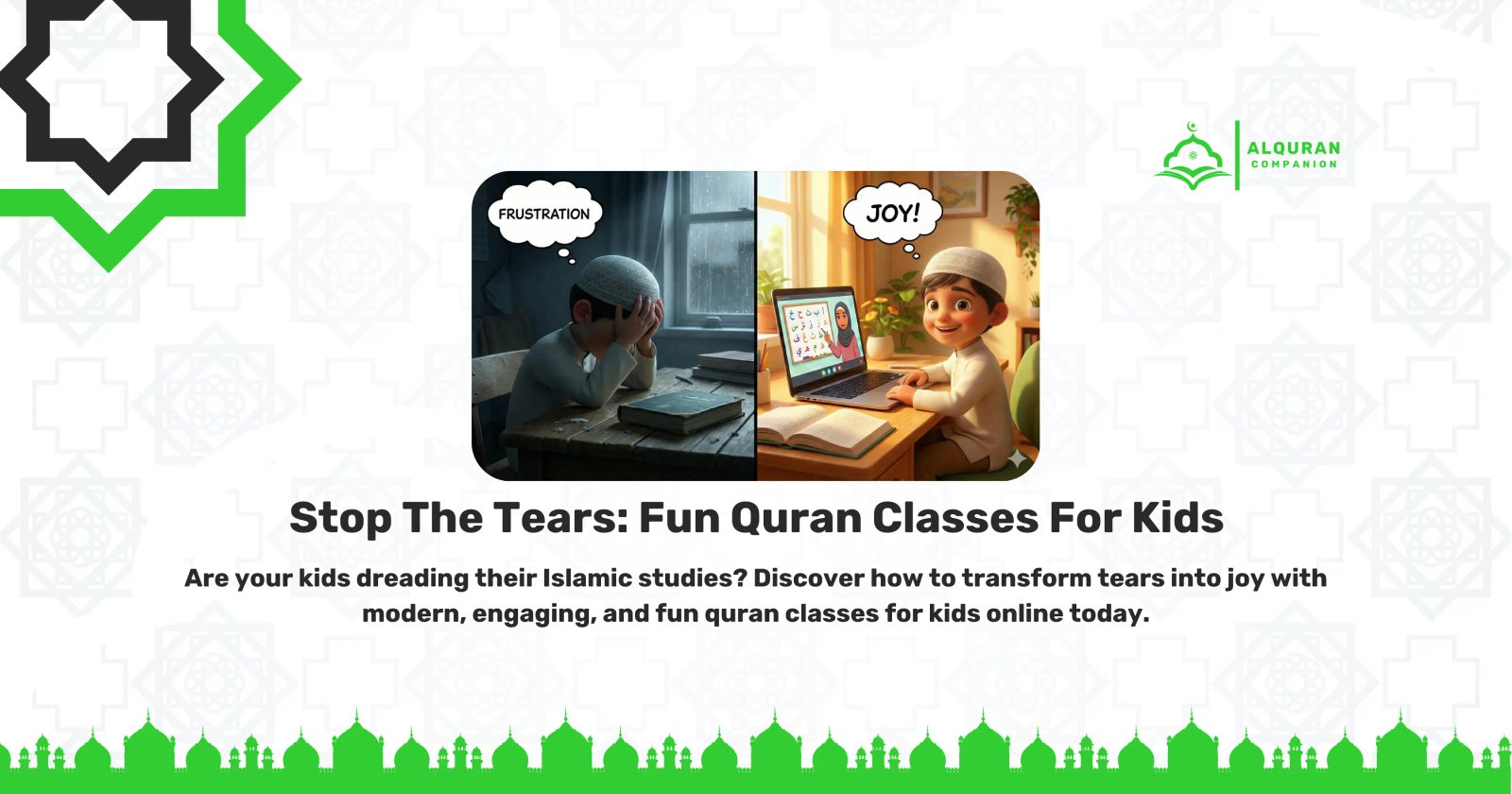
When families switch from crowded group rooms to private 1-on-1 instruction—like the methods shared in our guide on stopping tears in kids Quran lessons—the change shows up quickly. Your child rarely lacks spiritual curiosity; they simply hit sensory overload in a noisy room built for passive sitting. Online Quran classes for kids with ADHD remove that environmental stress by pairing one patient, English-fluent teacher with your child's unique focus pace.
لَا يُكَلِّفُ ٱللَّهُ نَفْسًا إِلَّا وُسْعَهَا ۚ لَهَا مَا كَسَبَتْ وَعَلَيْهَا مَا ٱكْتَسَبَتْ ۗ رَبَّنَا لَا تُؤَاخِذْنَآ إِن نَّسِينَآ أَوْ أَخْطَأْنَا ۚ رَبَّنَا وَلَا تَحْمِلْ عَلَيْنَآ إِصْرًا كَمَا حَمَلْتَهُۥ عَلَى ٱلَّذِينَ مِن قَبْلِنَا ۚ رَبَّنَا وَلَا تُحَمِّلْنَا مَا لَا طَاقَةَ لَنَا بِهِۦ ۖ وَٱعْفُ عَنَّا وَٱغْفِرْ لَنَا وَٱرْحَمْنَآ ۚ أَنتَ مَوْلَىٰنَا فَٱنصُرْنَا عَلَى ٱلْقَوْمِ ٱلْكَـٰفِرِينَ﴿٢٨٦﴾
Allāh does not charge a soul except [with that within] its capacity. It will have [the consequence of] what [good] it has gained, and it will bear [the consequence of] what [evil] it has earned. "Our Lord, do not impose blame upon us if we have forgotten or erred. Our Lord, and lay not upon us a burden like that which You laid upon those before us. Our Lord, and burden us not with that which we have no ability to bear. And pardon us; and forgive us; and have mercy upon us. You are our protector, so give us victory over the disbelieving people."
Notice how Allah Himself affirms human capacity, mercy, and pardon for unintentional forgetfulness in Surah Al-Baqarah 2:286—reminding parents that steady progress never requires harshness when a child gets distracted. Important Educational Boundary: Al Quran Companion teachers adapt lesson pacing, visual cues, and encouragement to support neurodivergent learners emotionally and educationally. Online Quran classes do not diagnose, treat, or replace clinical ADHD therapy—always partner with your child's pediatrician or developmental specialist for medical and behavioral care plans.
What Does the Sunnah Teach About Gentle Pacing and Effort?
Prophetic pedagogy prioritizes warmth, gentle steps, and consistent encouragement over rigid pressure. Prophet Muhammad ﷺ explicitly instructed teachers to make religious learning easy and welcoming rather than harsh, while promising double spiritual reward to believers who strive through reading difficulty.
Parents on online forums frequently wonder whether lowering daily memorization targets or adding playful letter-recognition breaks compromises authentic Islamic education. Across all four mainstream Sunni schools (Hanafi, Maliki, Shafi'i, and Hanbali), educational mercy builds lifelong devotion—protecting a child's affection for Allah's Book above rushing page volume. If you ever face a specific personal question around religious obligations or family routines, always consult a qualified local scholar or Mufti.
The Prophet (ﷺ) said, "Facilitate things to people (concerning religious matters), and do not make it hard for them and give them good tidings and do not make them run away (from Islam)."
وَلَقَدْ يَسَّرْنَا ٱلْقُرْءَانَ لِلذِّكْرِ فَهَلْ مِن مُّدَّكِرٍ﴿١٧﴾
And We have certainly made the Qur’ān easy for remembrance, so is there any who will remember?
The Prophet (ﷺ) said, "Such a person as recites the Quran and masters it by heart, will be with the noble righteous scribes (in Heaven). And such a person exerts himself to learn the Quran by heart, and recites it with great difficulty, will have a double reward."
Group Madrasah vs Rigid Private Tutor vs ADHD-Friendly 1-on-1 Classes
Comparing class formats side by side shows why structure matters more than sheer lesson hours. Crowded rooms overstimulate active kids, and unvetted solo tutors often lack backup supervision when pacing stalls, whereas a vetted 1-on-1 academy adapts live around attention spikes and Quality Control support.
Comparing Quran Learning Formats for Short Attention Spans
| Learning Factor | Crowded Group Madrasah | Unvetted Solo Tutor | Al Quran Companion 1-on-1 |
|---|---|---|---|
| Focus & Distractions | High hallway noise and waiting turns | Private room, varied consistency | Zero peer distractions, 100% teacher focus |
| Lesson Pacing | Fixed syllabus regardless of mood | Depends solely on tutor temperament | Custom 8–10 minute rotating sprints |
| Movement & Fidgeting | Expected to sit completely still | Mixed expectations on camera | Wiggle breaks and tactile tools welcomed |
| Quality Control | Minimal 1-on-1 feedback for parents | Zero oversight if tutor gets harsh | Dedicated QA team plus progress tracking |
| Trial Flexibility | Usually upfront term commitment | Paid first hour on ad-hoc apps | Free 3-Day Trial (No Credit Card) |
Focus & Distractions
Lesson Pacing
Movement & Fidgeting
Quality Control
Trial Flexibility
How We Structure 30-Minute Online Lessons for Short Focus Spans
Effective Quran classes for kids with short attention spans replace 30 straight minutes of dry drill with three rhythmic micro-blocks. Switching activities every 8 to 10 minutes keeps attention fresh, builds genuine Tajweed retention, and finishes class while your child still feels confident.
Parents on r/MuslimParenting emphasize that multi-day gaps destroy confidence faster than shorter, consistent sprints. During a 30-minute Zoom or Microsoft Teams session, our vetted instructors start with a friendly greeting, move into colorful interactive Noorani Qaida screen highlights, pause for a quick 30-second stretch break, and close with an encouraging dua or Prophet story. You can also explore picking the right Noorani Qaida starting pace and our masjid vs online comparison guide.
“Severe punishment in the course of instruction does harm to the student, especially to little children, because it belongs among (the things that make for a) bad habit. [...] It makes them feel oppressed and causes them to lose their energy. It makes them lazy and induces them to lie and be insincere.”
How to Set Up Calm Online Quran Classes at Home for an ADHD Child
5-Step Parent Routine for ADHD-Friendly Online Quran Sessions
Use this low-stress home setup before and during Zoom or Microsoft Teams classes to protect focus and avoid battles.
- 1
Run a 5-Minute Pre-Class Movement Reset
Let your child jump, stretch, or do wall pushes for five minutes before logging in so excess physical energy settles smoothly.
- 2
Pick Their Peak Brain Focus Window
Schedule 30-minute slots when alertness peaks—many US, UK, Canadian, EU, UAE, and Australian families prefer calm morning or weekend slots.
- 3
Brief the Teacher Before Trial Day One
Share focus spans, sensory triggers, and reward styles openly so our Admissions and Quality Control team pairs a calm, patient tutor.
- 4
Allow Silent Fidgets and Clear Visual Timers
Keep a stress ball, standing cushion, or quiet visual timer off-camera while keeping toys and mobile notifications out of sight.
- 5
Praise Specific Effort Right After Class
Celebrate one clear win right away—like remembering a heavy letter or sitting kindly—instead of lecturing over missed lines.
For parents checking whether current lessons are truly connecting emotionally, read our parent checklist on signs your child's Quran classes are working and check how structured 1-on-1 feedback beats endless passive videos.
What Does 1-on-1 Online Tuition Cost Across Time Zones?
Live 30-minute 1-on-1 Quran classes at Al Quran Companion range from $25.99 to $55.99 per month in the USA and £19.99 to £49.99 per month in the UK, backed by a Free 3-Day Trial (No Credit Card Required), zero setup fees, a 5% processing fee, and a 10% yearly discount.
Since 2009, Al Quran Companion has taught 2,860+ active students with 300+ vetted male and female teachers, earning a 4.5 / 5 Trustpilot rating. Families across the United States, Canada, the UK, Europe, the UAE, and Australia can review full currency schedules on our US tuition page and UK pricing page, watch how their child responds on Zoom or Microsoft Teams during the free trial, and request a smooth teacher switch anytime through Quality Control.
Frequently Asked Questions from Parents
Yes, most parents find 1-on-1 online classes far easier for children with ADHD because there are zero hallway or peer distractions, zero embarrassment in front of classmates, and immediate custom pacing that bends around your child's energy level.
Standard sessions run 30 minutes, divided by our teachers into three varied 8-to-10-minute blocks (quick review, interactive new reading, and calm closing dua or story). Finishing earlier on active-learning days prevents frustration while still building steady weekly habits.
Yes. Quiet fidget tools like a soft stress ball, standing beside a desk, or taking a 30-second stretch halfway through class are completely welcomed when arranged openly with your teacher during the trial.
Share three helpful points with Admissions before your Free 3-Day Trial: how long your child currently focuses on reading tasks, which interests or praise words motivate them best, and whether you prefer a male or vetted female teacher.
Yes. In Sahih al-Bukhari (Hadith 4937), Prophet Muhammad ﷺ taught that the person who strives sincerely and recites the Quran with difficulty receives a double reward. Consistent, gentle effort at any pace is deeply honored in Islam.
Absolutely. With 300+ vetted male and female instructors and Quality Control supervision, parents can test tutor fit free during the 3-Day Trial and switch instructors smoothly anytime with zero extra fee.