Introduction
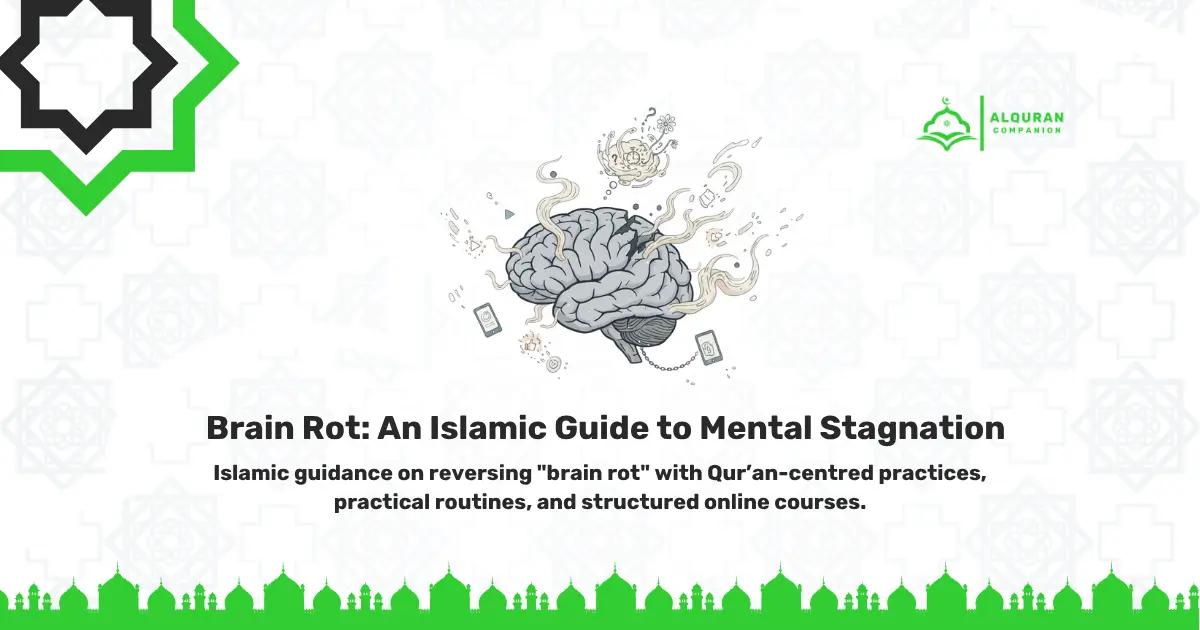
The phrase brain rot is modern slang for mental stagnation — a slow decay of attention, purpose, and intellectual or spiritual vitality caused by prolonged distraction, idle consumption, or sinful habits. Although the wording is contemporary, the phenomenon is not new: the Qur’an and the Sunnah warn repeatedly against heedlessness (غفلة) and wasting the two great blessings of health and free time. In this article I will explain what brain rot looks like in life and worship, show its Islamic diagnosis (Qur’an and Hadith), and give a practical, spiritually rooted plan to recover — emphasising how structured Quran study and qualified teachers can restore clarity and purpose.
What people mean by “brain rot” (a working definition)
In everyday language brain rot refers to:
- Persistent inability to concentrate, think deeply, or finish meaningful tasks.
- A creeping attachment to entertainment, endless scrolling, or gossip that saps purpose.
- Reduced appetite for learning, reflection, or devotional acts.
- Emotional numbing, anxiety, or listlessness that accompanies the above.
From an Islamic viewpoint, these signs point toward ghaflah (heedlessness) and misuse of the time and faculties Allah has given us. The Prophet ﷺ warned us that many people are deceived into losing two blessings: good health and free time — precisely the resources needed to develop the intellect and the soul.
The Qur’anic diagnosis: life’s distractions and the call to wakefulness
The Qur’an repeatedly reminds us that this world is a temporary field of distraction if we let it be so. Allah says about worldly life:
اِعۡلَمُوۡۤا اَنَّمَا الۡحَيٰوةُ الدُّنۡيَا لَعِبٌ وَّلَهۡوٌ وَّزِيۡنَةٌ وَّتَفَاخُرٌۢ بَيۡنَكُمۡ وَتَكَاثُرٌ فِى الۡاَمۡوَالِ وَالۡاَوۡلَادِؕ كَمَثَلِ غَيۡثٍ اَعۡجَبَ الۡكُفَّارَ نَبَاتُهٗ ثُمَّ يَهِيۡجُ فَتَرٰٮهُ مُصۡفَرًّا ثُمَّ يَكُوۡنُ حُطٰمًاؕ وَفِى الۡاٰخِرَةِ عَذَابٌ شَدِيۡدٌ ۙ وَّمَغۡفِرَةٌ مِّنَ اللّٰهِ وَرِضۡوَانٌؕ وَمَا الۡحَيٰوةُ الدُّنۡيَاۤ اِلَّا مَتَاعُ الۡغُرُوۡرِ﴿٢٠﴾
Know that the life of this world is but amusement and diversion and adornment and boasting to one another and competition in increase of wealth and children - like the example of a rain whose [resulting] plant growth pleases the tillers; then it dries and you see it turned yellow; then it becomes [scattered] debris. And in the Hereafter is severe punishment and forgiveness from Allāh and approval. And what is the worldly life except the enjoyment of delusion.
That verse diagnoses the problem: when our focus becomes primarily on play, diversion, and passing sensation, the intellect and heart atrophy. The remedy the Qur’an offers is the opposite: remembrance of Allah, study, reflection on the signs, and deeds that anchor us in purpose.
The Prophetic reminder: two wasted blessings
The Prophet ﷺ said succinctly about the very resources that brain rot squanders:
The reward of deeds depends upon the intentions and every person will get the reward according to what he has intended. So whoever emigrated for worldly benefits or for a woman to marry, his emigration was for what he emigrated for.
Narrated by: Umar bin Al-Khattab
Put together, the Qur’an and Sunnah tell us that the illness of mind and spirit is both real and treatable: it grows where heedlessness reigns, and it is cured by purposeful use of the blessings God has entrusted to us.
Why modern life accelerates brain rot — a sober look
Several social and psychological dynamics make brain rot common today:
- Endless low-effort stimulation. Platforms engineered for short attention fragments reduce capacity for extended focus.
- Passive consumption vs. active learning. Consuming content without reflection weakens habit-formation of disciplined study.
- Fragmented schedules. Irreg
- ular sleep, poor diet, and constant notifications degrade cognitive control.
- Spiritual drift. When the soul loses its centre (remembrance of Allah), the heart becomes prone to boredom and a hunger for superficial thrills.
These are not merely cultural observations; they connect to clear Islamic categories: loss of time, heedlessness (ghaflah), and neglect of the soul’s nourishment.
A practical Islamic program to reverse “brain rot”
Below is a practical, Qur’an-centred plan that combines spiritual remedies, cognitive hygiene, and structured learning. I present it as both a spiritual prescription and a learning roadmap.
1. Reclaim time — small consistent blocks
The Prophetic advice about time calls us to steward minutes, not just days. Start with two 30–45 minute focused blocks daily dedicated to meaningful activity: Qur’an recitation, studying a short tafsir, or learning a practical skill. Consistency matters more than duration at first.
Why this helps: short focused sessions rebuild attention; the brain rewards completion and repetition with greater concentration.
2. Daily Dhikr and deliberate reflection
Make a short schedule of morning and evening remembrance: simple phrases of gratitude, the morning adhkar, and a 5–10 minute quiet reflection on one verse of the Qur’an. Replace one 15-minute passive scroll with this practice.
Why this helps: Dhikr counters ghaflah by orienting the heart toward Allah and restoring purpose.
3. Structured Quran study — read with a teacher
The Qur’an is not merely spiritual food; it is a precise text that trains the tongue, ear, heart, and intellect. Enrolling in structured Quran lessons — whether Tajweed for correct recitation, Tarteel for contemplation, or Hifz for memorization — brings discipline, external accountability, and measurable progress.
Al Quran Companion offers comprehensive courses (Tajweed, Recitation, Hifz, Tafsir, and a Quranic Foundation) taught one-to-one by certified teachers; these programs are specifically designed to rebuild attentiveness and love for the Book.
4. Learn with a qualified teacher and an accountable plan
Self-study is valuable, but a qualified tutor provides correction, motivation, and a tailored learning plan. A teacher notices small errors, prevents bad habits, and sets gradual, attainable goals. If you are recovering from brain rot, the structure of regular lessons re-trains your will.
Al Quran Companion’s tutor screening, curriculum paths (e.g., Tajweed Mastery), and progress tracking are examples of how institutional support accelerates recovery.
5. Healthy body, healthy mind
Sleep regulation, light exercise (even daily walking), and a moderate diet increase cognitive stamina. The Qur’an and Sunnah show concern for moderation; the brain needs physical care to think clearly.
6. Replace passive entertainment with active creation
If much of your leisure is passive consumption, try swapping one passive hour for one active hour: memorizing a verse, writing brief reflections, or teaching a child a short surah. Active engagement rewires reward pathways.
How Quran courses address specific symptoms of brain rot
Here’s how particular course types help:
- Tajweed and Recitation courses rebuild focused attention by training the mouth, ear, and lungs to produce correct recitation — a multisensory discipline that strengthens concentration.
- Hifz (memorization) programs cultivate retention, rhythm, and daily revision habits which directly counter forgetfulness and aimlessness.
- Tafsir study restores meaning: it connects recitation to understanding, which supplies the heart with purpose and the mind with reasons to engage.
Structured courses combine repetition, feedback, and spiritual intent — a powerful antidote to the listless habits that feed brain rot.
Practical routine example for the busy believer
A simple daily routine to begin reversing mental stagnation:
- Fajr: short dhikr + 10 minutes Quran recitation with focus (or listening to a reciter while following the text).
- Mid-morning: 30–45 min focused study block (Tajweed practice / memorization / tafsir reading). If you have a teacher, this is your lesson time.
- Afternoon: 10–15 min light exercise + review (repeat the morning’s new memorization).
- Evening: 20–30 min reflective reading (one ayah of tafsir + journaling one takeaway).
- Before sleep: gratitude dhikr and 5 minutes of calm breathing.
This routine is flexible; begin where you can and increase gently.
How to choose the right teacher and program
Look for teachers who:
- Have clear credentials in Tajweed and/or Hifz. (Ijāzah or certified teaching experience is a positive sign.)
- Can provide a structured curriculum and weekly goals.
- Offer regular progress tracking and session recordings so you can review corrections.
- Are patient and accustomed to working with students rebuilding habits.
Al Quran Companion publishes course descriptions, teacher profiles, and emphasizes one-to-one lessons, progress tracking, session recordings, and certificates — resources that help you choose a program and a compatible tutor.
Practical ways Al Quran Companion can help you recover from brain rot
If you want an organized, authentic path back to attentiveness and spiritual vitality, a reputable Quran platform provides:
- One-to-one lessons with certified teachers (customised pacing).
- Clear course tracks (Tajweed, Hifz, Tafsir, Recitation, Foundation) that supply daily and weekly goals.
- Progress tracking and recorded sessions so you see measurable improvement and review teacher corrections.
- Free trial/evaluation classes to start without commitment. (Check the terms — new students may receive trial classes.)
Using a structured course helps you replace fragmented, aimless habits with disciplined acts of worship and study — the most reliable path to mental and spiritual renewal.
Addressing Common Barriers
"“I’m too busy.” Start with tiny habits: five minutes daily can grow into thirty. The Prophet ﷺ taught progress through continuity."
"“I tried and lost focus.” Review recorded lessons and ask your teacher for micro-tasks. Accountability matters."
"“I’m not religious enough.” Begin with the Qur’an as a language of mercy — no prior piety is required to benefit from steady learning."
Evidence from experience — Why Disciplined Quran Study Works?
Learning the Qur’an trains both mind and heart:
- It develops working memory (through memorization and revision).
- It trains attention control (through focused recitation and Tajweed practice).
- It nurtures moral imagination (through Tafsir and reflection).
Institutions that combine qualified teachers, clear curriculum, progress tracking, and supportive communities offer the behavioral scaffolding necessary to replace passive consumption with active devotion. For example, Al Quran Companion offers packages with varying lesson frequencies and progress reports to fit different schedules and budgets.
A Short Spiritual Reflection to End the Day
When you feel the fog of brain rot, read one verse slowly, listen, and ask: What does this ask of me right now? That small habit reconnects the intellect to the heart and the heart to action. As the Qur’an reminds us, life’s true aim is the work of the Hereafter; every corrective action we take restores the soul’s orientation.
FAQs

Al Quran Companion Team
Verified AuthorThe official academic and editorial team at Al Quran Companion, a leading Online Quran Academy dedicated to simplifying Tajweed, Hifz, and Islamic studies for students worldwide.
Read more about author