
Learn Quran Online: A Comprehensive Guide to Quranic E-Learning
In the digital age, learning the Holy Qur’an has never been more accessible. Whether you are a working parent, a student, or seeking to deepen your recitation, learning Quran online offers authentic Islamic education at your fingertips. The first revelation of the Qur’an commands “اقْرَأْ بِاسْمِ رَبِّكَ الَّذِي خَلَقَ” (“Read, in the Name of your Lord Who created”), emphasizing the importance of seeking knowledge. The Prophet ﷺ also said, “The best among you (Muslims) are those who learn the Qur’an and teach it”. Guided by these sacred teachings, many believers today choose online Quran classes for their blend of authenticity and convenience. This guide explains how and why to learn Quran online effectively, the virtues of Quranic learning, and how trusted platforms like Al Quran Companion support your journey.
The Virtues of Quranic Learning
Studying the Qur’an is a noble endeavor with immense spiritual rewards. The Prophet ﷺ taught, “Whoever follows a path in pursuit of knowledge, Allah will make easy for him a path to Paradise”. Learning the Qur’an specifically carries even greater blessing. Allah promises that the Qur’an is made easy to remember and act upon: وَلَقَدْ يَسَّرْنَا الْقُرْءَانَ لِلذِّكْرِ – “And We have certainly made the Qur’an easy to remember. So is there anyone who will remember?”. Furthermore, Allah raises in rank those who earnestly seek knowledge: يَرْفَعِ اللَّهُ ٱلَّذِينَ ءَامَنُوا۟ مِنكُمْ وَٱلَّذِينَ أُوتُوا۟ ٱلْعِلْمَ دَرَجَـٰتٍ – “Allah will raise those who believe from among you and those who were given knowledge, in degrees”. In light of these teachings, dedicating time—even online—to recite, memorize, and understand the Qur’an is greatly encouraged. As Muslims, we should seize every opportunity to deepen our relationship with the Book of Allah and reap its eternal rewards.
Benefits of Learning Quran Online
Online Quran classes combine traditional scholarship with modern convenience. Students from around the world can connect with certified Qur’an teachers from home. This format removes barriers of distance and fixed schedules. You simply need an internet connection and a device to begin. Online classes are highly flexible – you can schedule lessons in the morning, evening, or weekends to suit your routine. They offer personalized one-on-one instruction, which means the teacher focuses on your individual needs (such as perfecting your tajweed or memorization pace). Technology also enables progress tracking and feedback: teachers can share progress reports, and many platforms record sessions so you can review them later.
Renowned academies (like Al Quran Companion) highlight these advantages. For example, Al Quran Companion has “over 15 years of excellence in online Quran education” with “certified Tajweed teachers with Ijazah credentials”. They provide 1-on-1 personalized lessons, 24/7 student support, and even free trial classes. Additional benefits include recorded sessions for revision, a mobile app for on-the-go learning, digital certificates upon completion, and family discounts for multiple siblings. In short, online learning makes authentic Qur’anic education accessible, convenient, and effective – whether you live in a city or a remote area, on a tight schedule or with special needs.
Key Components of Quranic Education Online
An effective Quranic curriculum (online or offline) covers several pillars: Tajweed and Recitation, Memorization (Hifz), Tafsir (explanation of meanings), and Arabic literacy.
- Tajweed & Recitation: Proper pronunciation is essential. Allah commands in the Qur’an: وَرَتِّلِ الْقُرْآنَ تَرْتِيلًا – “And recite the Qur’an in measured recitation”. This means articulating each letter clearly and melodiously. In online classes, a certified teacher listens to your recitation live and corrects your articulation (makharij) on the spot. Many students find that seeing mouth movements via video and hearing immediate feedback helps solidify correct Tajweed. For example, Al Quran Companion’s Tajweed course focuses on the rules of makhārij (letter articulation) and rhythmic recitation techniques.
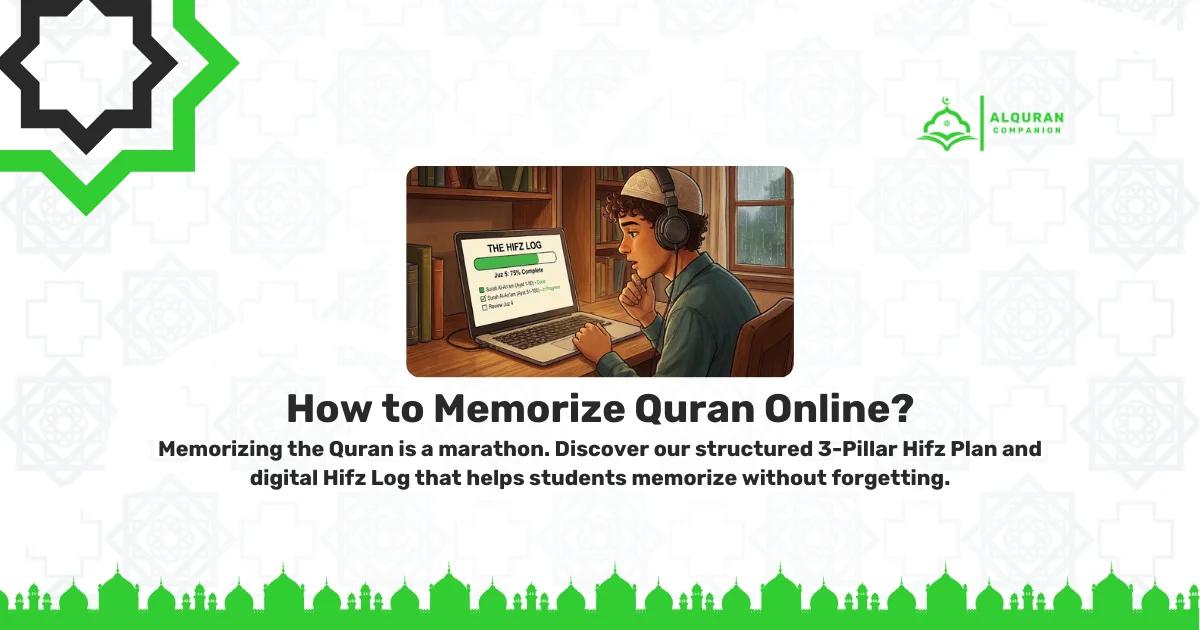
- Memorization (Hifz): Memorizing verses strengthens your bond with Allah’s word. The Prophet ﷺ said about the one who memorizes the Qur’an: “Such a person as recites the Qur’an and masters it by heart will be with the noble righteous scribes (in Paradise)”. He added that those who exert great effort to learn it will earn a double reward. Online Hifz programs guide students verse-by-verse with regular revision schedules and check-ins. Many platforms use structured plans, digital charts, and audio recordings to help students retain what they memorize.
- Tafsir and Understanding: It’s important not just to recite, but to understand the meanings of what you recite. Tafsir classes (Quranic exegesis) explain the context, grammar, and lessons of each surah. Online courses often include discussions on major themes and wisdom of verses. This is vital for living by the Qur’an, not just reading it.
- Arabic Language Foundations: Since the Qur’an is in Arabic, learning basic Arabic literacy and grammar greatly aids comprehension. Many academies bundle Arabic reading courses to help beginners decode verses. Even for non-Arabic speakers, understanding key words and grammar boosts the connection to the Qur’an’s message.
By covering all these components, an online Quran program ensures a balanced Islamic education. When researching programs, look for those offering a “comprehensive curriculum covering Quran recitation and memorization”, as well as supplementary courses in Tafsir and Arabic, so you grow in all dimensions of Qur’anic learning.
Choosing the Right Online Quran Academy
Not all online courses are created equal. To make your learning effective and authentic, consider these factors when choosing a Quran learning platform:
- Certified Instructors: Ensure teachers hold an Ijazah (license) in Quran recitation or Hifz. Ijazah-certified teachers have received an unbroken chain of transmission from the Prophet ﷺ. Al Quran Companion, for example, employs Ijazah-certified scholars and Qaris.
- Personalized 1-on-1 Classes: One-on-one sessions allow the teacher to tailor lessons to your level and pace. Look for institutes that emphasize personal attention (instead of large lectures).
- Flexible Scheduling: The academy should offer a range of class times, including weekends or evenings, to fit your lifestyle. Many platforms explicitly state “Free trial lessons and flexible scheduling options”, so you can choose what works best.
- Progress Tracking & Support: A quality program will track your improvement over time. Check if they provide progress reports, feedback, or milestone certificates. Al Quran Companion’s packages include student progress tracking and even class recordings for review. Also note if they offer 24/7 technical or educational support via chat or WhatsApp, as this helps resolve any issues quickly.
- Trial Lessons & Reviews: Before committing, take advantage of any free trial lesson to gauge the teaching style. Also seek testimonials or reviews from other students. A reputable academy often has high student ratings (Al Quran Companion advertises a 4.9★ average) and allows new students to try a lesson risk-free.
- Value-Added Benefits: Some institutes provide extra perks like mobile app access, digital certificates, or group discounts. For instance, Al Quran Companion offers family discounts (up to 20%) for multiple siblings enrolled, as well as a mobile app so you can practice on-the-go.
By evaluating these criteria, you can choose an academy that aligns with traditional Islamic standards and modern learning needs. The goal is to ensure your online Quran classes are as spiritually rewarding and rigorous as traditional madrasa learning.
How to Learn Quran Online: A Step-by-Step Guide
Getting started online is simple. Here are recommended steps to begin your Quranic education journey:
- Assessment & Consultation: Contact your chosen academy and sign up for a free consultation or trial class. During this session, an instructor will assess your current Quran proficiency, Tajweed knowledge, and learning goals. This helps them craft a personalized plan. (For example, Al Quran Companion offers a free Get Free Consultation service.)
- Set Up Your Space: Choose a quiet, well-lit spot for classes. Equip yourself with a reliable internet connection, a device (computer/tablet/phone), headphones or speakers, and a Qur’an (Mushaf) if possible. Familiarize yourself with the academy’s learning platform or app ahead of time.
- Schedule Regular Classes: Decide on a weekly schedule. Consistency is key in Quranic learning. Commit to the class times that fit your routine. Many online schools provide flexible slots – even after work or on weekends – so find what you can keep up with.
- Engage in Lesson: In each live session, be fully present. Listen carefully to your teacher’s recitation and explanations. Recite aloud, so the teacher can hear you and correct your pronunciation (rather than reading silently). Don’t hesitate to ask questions about any part of the lesson.
- Utilize Resources: Take advantage of classroom recordings and study materials. Re-listen to difficult sections, practice the homework (for example, review new verses or rules taught), and apply notes on Tajweed. If your platform has a mobile app, use it for daily revision quizzes or recitation practice between classes.
- Track Progress: Periodically evaluate your own progress. Celebrate memorization milestones or improved recitation. Good programs often have check-ins or quizzes to test your retention. Keep in touch with your teacher on what areas need more focus.
- Maintain Intention and Consistency: Remember your purpose (niyyah) is to seek Allah’s pleasure. Even short daily practice (10–15 minutes reciting on your own) adds up. Stay patient and make du’a (supplication) before and after learning. The scholars say the mere act of starting this journey pleases Allah.
By following these steps and making learning Quran online part of your routine, you set a strong foundation. Many students find that within months they gain confidence in tajweed and gradually memorize more surahs. As Allah promises ease in recitation (Sahih International), “We have certainly made the Qur’an easy for remembrance, so is there any who will remember?” – so take this path to benefit from its blessings.
Tips for Success in Online Quran Study
- Set Clear Intentions: Always begin with sincere intention to seek knowledge for Allah’s sake. This spiritual focus sustains motivation.
- Create a Schedule: Block out specific study times each week and stick to them. Consistency beats intensity; even regular short sessions are better than sporadic long ones.
- Minimize Distractions: During lessons, turn off notifications, let family members know you’re learning, and keep materials ready. A quiet environment helps concentration, so you can fully absorb the teacher’s guidance.
- Use the Technology: Don’t shy away from digital tools. Replay recorded classes to improve on mistakes. Use tajweed apps and online dictionaries for supplementary practice. Engage in any community forums or study groups your institute provides.
- Review Regularly: After each lesson, spend a few minutes reviewing the new verses or rules you learned. Daily revision (morning or evening) prevents forgetfulness, especially in memorization.
- Ask Questions: If a word, rule, or interpretation confuses you, ask your teacher. In an online class, you can often type questions in chat as well. Remember the Prophet’s ﷺ advice: “He who asks a question in order to learn something is like one who journeys in the path of Allah” (Tirmidhi).
- Practice Recitation (Tilawah): Make it a habit to recite the Qur’an during the day, even outside class. For example, recite one verse before sleeping. Gradual habit-building makes Quran part of your life.
- Stay Patient and Positive: Learning the Qur’an perfectly takes time. Celebrate small victories (like correctly reciting a new letter) and stay positive. The Prophet ﷺ mentioned that even a single letter recited from the Qur’an is rewarded.
By applying these tips, you will maximize the benefit of your online learning. Remember, technology is just a means – sincere effort and consistency bring the true growth in faith and knowledge.
Conclusion
Online Quran learning harmonizes modern convenience with the timeless quest for Quranic knowledge. The Qur’an and Sunnah encourage every Muslim to seek this knowledge passionately. As Prophet ﷺ reminded us, “The best among you are those who learn the Qur’an and teach it”. By choosing a quality platform – with certified teachers, personalized plans, and supportive tools – you honor this prophetic guidance and draw closer to Allah’s Book.
Institutions like Al Quran Companion exemplify such an approach. They connect students in 50+ countries with Ijazah-certified scholars, provide Tajweed, Hifz, Tafsir, and Arabic courses, and include progress tracking, recorded sessions, certificates, and more. Whether you are a child or an adult, learning the Qur’an online can be just as effective and enriching as traditional classes, while offering flexibility for today’s busy lives.
May Allah make the Qur’an light upon our hearts and an intercessor on the Day of Judgment. As we take each step on this blessed journey – even via a screen – let us seek His help and remain steadfast. Begin today, perhaps with a free trial session, and embark on a path that brings guidance and mercy. Allah says, “So when the Qur’an is recited, then listen to it and pay attention that you may receive mercy” (7:204). Embrace the convenience of online learning and let the Qur’an’s wisdom transform your life, here and in the hereafter.
FAQs

Al Quran Companion Team
Verified AuthorThe official academic and editorial team at Al Quran Companion, a leading Online Quran Academy dedicated to simplifying Tajweed, Hifz, and Islamic studies for students worldwide.
Read more about author