Standing inside masjid al-haram in mecca changes a believer forever. Five times every single day, over 1.9 billion Muslims pause their worldly routines in London, New York, Toronto, Sydney, and Dubai to turn their faces toward one exact geographical coordinate in the Hijaz mountains of Saudi Arabia. Whether a child is learning where to face for prayer in a quiet Birmingham living room or a revert in Chicago is calibrating a digital compass to find out which direction is Mecca, the spiritual gravity of Makkah al-Mukarramah pulls every Muslim heart home.
Here is why: Makkah is the physical anchor of Tawheed (the absolute Oneness of Allah) on earth. In our live 1-on-1 classes at Al Quran Companion, we frequently observe students struggling with the deeper historical context of the Makkan Surahs until they visualize the barren valley where Prophet Ibrahim (AS) raised the foundations of the Kaaba and where Prophet Muhammad ﷺ received the first words of the Holy Quran. When you understand the sacred geography of the Haram, every Surah you recite in Salah comes alive with immediate clarity.
Table of Contents: Understanding the Sanctity of Makkah and Masjid al-Haram
- Why Is Masjid al-Haram in Mecca Called the Holiest Sanctuary in Islam?
- One City, Over 1.9 Billion Hearts: The Global Qibla and Umrah Pilgrimage
- Makkah in Islamic History: From Prophet Ibrahim (AS) and Zamzam to Quraysh
- The Importance of the Kaaba: The First House of Worship and Tawheed
- Prepare Your Recitation and Duas Before Visiting Masjid al-Haram
- The Birthplace of Prophet Muhammad ﷺ in the Year of the Elephant
- The Revelation of the Quran in Cave Hira (Jabal al-Noor)
- The Sanctity of Makkah (Al-Balad Al-Haram): Four-Madhab Rulings and Virtues
- The Treaty of Hudaybiyyah and Bay'at al-Ridwan (Pledge of the Tree)
- How to Prepare Spiritually and Logistically Before Visiting Masjid al-Haram
- Conclusion: Preparing Your Heart and Journey to the Sacred City
- Frequently Asked Questions
Key Takeaways
- Masjid al-Haram in Mecca houses the Kaaba, the very first House of worship established for humanity as confirmed in Surah Ali 'Imran (3:96).
- Over 1.9 billion Muslims unite five times daily by facing the Qibla in Makkah, fulfilling the divine command revealed in Surah Al-Baqarah (2:144).
- Makkah's sacred history spans five distinct epochs: Prophet Ibrahim (AS) and Hajar (AS) at Zamzam, the rise of the Quraysh tribe, the birth of Prophet Muhammad ﷺ in 570 CE, the first Quranic revelation at Cave Hira in 610 CE, and the peaceful return after the Treaty of Hudaybiyyah.
- Across all four Sunni schools of jurisprudence (Hanafi, Maliki, Shafi'i, and Hanbali), the Haram sanctuary holds strict legal rulings prohibiting bloodshed, hunting native wildlife, and cutting wild vegetation, while multiplying a single Salah in Masjid al-Haram by 100,000 rewards.
- Preparing for Umrah or Hajj requires both logistical planning (such as securing ATOL-protected travel for UK families) and spiritual readiness through accurate Tajweed and Quranic Tafsir.
Why Is Masjid al-Haram in Mecca Called the Holiest Sanctuary in Islam?
Makkah al-Mukarramah (historically named Bakkah from the Arabic root Ba-Kaf-Kaf meaning to crowd or humble pride) is the holiest city in Islam because it houses the Kaaba inside masjid al-haram in mecca. Allah establishes this sanctuary in Surah Ali 'Imran (3:96) as the first House of worship appointed for humankind. For Western diaspora Muslims today, Makkah serves as the daily Qibla for over 1.9 billion believers, the birthplace of Prophet Muhammad ﷺ, and the mandatory destination for Hajj and Umrah.
For a closer look, read our guide to who wrote the Quran.
اِنَّ اَوَّلَ بَيۡتٍ وُّضِعَ لِلنَّاسِ لَـلَّذِىۡ بِبَكَّةَ مُبٰرَكًا وَّهُدًى لِّلۡعٰلَمِيۡنَۚ﴿٩٦﴾
inna awwala baytin wuḍiʿa lilnnāsi lalladhī bibakkata mubārakan wahudan lil'ʿālamīna
Indeed, the first House [of worship] established for mankind was that at Bakkah [i.e., Makkah] - blessed and a guidance for the worlds.
Consider this linguistic precision in the verse above. In his classical Tafsir, Imam Ibn Kathir explains that the Quranic name Bakkah refers specifically to the sacred precinct surrounding the Kaaba inside Masjid al-Haram, whereas Makkah encompasses the entire surrounding city within the Haram boundary markers. Linguists note that Bakkah derives from 'tabukk', meaning that the sanctuary humbles the necks of tyrants and causes believers to crowd shoulder-to-shoulder in humble devotion.
Unlike ordinary historical capitals that gained prominence through military empire or agricultural rivers, Makkah sits in a dry, uncultivated valley surrounded by the rugged Sirat mountains. Its supreme status in Islam rests entirely on divine election. First, Allah chose this exact plot of earth for the first monotheistic sanctuary. Second, Allah honored this valley as the birthplace of the final Messenger, Prophet Muhammad ﷺ, and the cradle where the angel Jibreel (AS) delivered the opening verses of the Quran. Third, Allah made visiting this sacred house a pillar of faith for every Muslim who is physically and financially able, as detailed in our complete guide to Hajj, the Fifth Pillar of Islam.
One City, Over 1.9 Billion Hearts: The Global Qibla and Umrah Pilgrimage
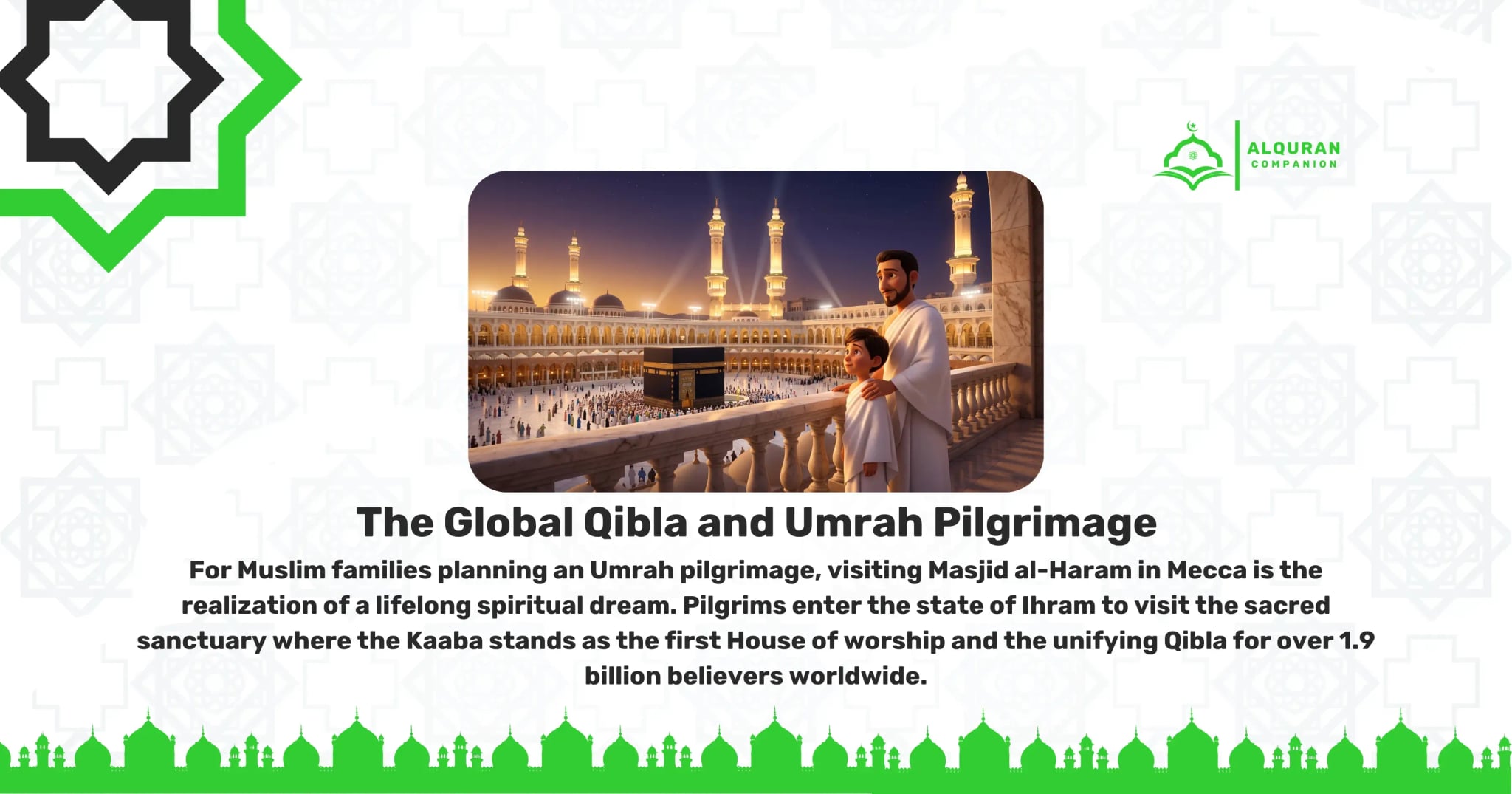
Al-Qiblah (derived from the Arabic root Qaf-Ba-Lam, signifying the direction one faces directly) is the sacred spiritual axis pointing toward the Kaaba inside Masjid al-Haram. Allah commanded Prophet Muhammad ﷺ in Surah Al-Baqarah (2:144) to turn his face from Jerusalem toward the Sacred Mosque in Makkah. This daily alignment unites over 1.9 billion Muslims across London, Birmingham, Lahore, Toronto, and Nairobi five times a day in pure Tawheed.
قَدۡ نَرٰى تَقَلُّبَ وَجۡهِكَ فِى السَّمَآءِۚ فَلَـنُوَلِّيَنَّكَ قِبۡلَةً تَرۡضٰٮهَا فَوَلِّ وَجۡهَكَ شَطۡرَ الۡمَسۡجِدِ الۡحَـرَامِؕ وَحَيۡثُ مَا كُنۡتُمۡ فَوَلُّوۡا وُجُوۡهَكُمۡ شَطۡرَهٗ ؕ وَاِنَّ الَّذِيۡنَ اُوۡتُوا الۡكِتٰبَ لَيَـعۡلَمُوۡنَ اَنَّهُ الۡحَـقُّ مِنۡ رَّبِّهِمۡؕ وَمَا اللّٰهُ بِغَافِلٍ عَمَّا يَعۡمَلُوۡنَ ﴿١٤٤﴾
qad narā taqalluba wajhika fī l-samāi falanuwalliyannaka qib'latan tarḍāhā fawalli wajhaka shaṭra l-masjidi l-ḥarāmi waḥaythu mā kuntum fawallū wujūhakum shaṭrahu wa-inna alladhīna ūtū l-kitāba layaʿlamūna annahu l-ḥaqu min rabbihim wamā l-lahu bighāfilin ʿammā yaʿmalūna
We have certainly seen the turning of your face, [O Muḥammad], toward the heaven, and We will surely turn you to a qiblah with which you will be pleased. So turn your face [i.e., yourself] toward al-Masjid al-Ḥarām. And wherever you [believers] are, turn your faces [i.e., yourselves] toward it [in prayer]. Indeed, those who have been given the Scripture [i.e., the Jews and the Christians] well know that it is the truth from their Lord. And Allāh is not unaware of what they do.
Think about what happens at prayer time across the globe. A surgeon in Manchester stepping away from a hospital ward, a software engineer in Austin pausing between meetings, and a shopkeeper in Nairobi rolling out a prayer mat all orient their bodies toward the exact same focal point. When someone asks which direction is Mecca, they are really asking how to align their physical posture with the center of divine worship on earth. By performing the five daily prayers (Salah) toward the Qibla, geographical borders, ethnic divisions, and social hierarchies dissolve into one concentric circle around the House of Allah.
That lifelong daily orientation naturally builds a deep yearning to see the Kaaba with one's own eyes through the Umrah or Hajj pilgrimage. For British Muslim families planning Umrah from London, Birmingham, Manchester, or Glasgow during school half-terms or Ramadan, turning that spiritual dream into a smooth reality requires careful logistical preparation. Coordinating direct or short-layover flights, securing proximity hotels within walking distance of the Haram courtyard for elderly parents and young children, and processing Saudi tourist or Umrah visas can feel overwhelming without accredited guidance. Many UK families streamline these logistics by booking ATOL-protected cheap Umrah packages so they can shift their mental energy away from travel stress and focus entirely on worship, Dua, and Quranic reflection inside Masjid al-Haram.
Makkah in Islamic History: From Prophet Ibrahim (AS) and Zamzam to Quraysh
The 5-Stage Seerah Narrative Arc of Makkah (originating from the Arabic term Sirah, meaning biographical path or historical journey) traces how a waterless valley became the spiritual capital of Islam. This sacred timeline is anchored in Surah Ibrahim (14:37) and Sahih Al-Bukhari (Hadith #3364), recording Prophet Ibrahim's (AS) settlement of his family in Makkah. Understanding this five-stage chronology helps Western Muslim parents teach their children how unwavering trust in Allah transforms barren trials into global blessings.
رَبَّنَاۤ اِنِّىۡۤ اَسۡكَنۡتُ مِنۡ ذُرِّيَّتِىۡ بِوَادٍ غَيۡرِ ذِىۡ زَرۡعٍ عِنۡدَ بَيۡتِكَ الۡمُحَرَّمِۙ رَبَّنَا لِيُقِيۡمُوۡا الصَّلٰوةَ فَاجۡعَلۡ اَ فۡـٮِٕدَةً مِّنَ النَّاسِ تَهۡوِىۡۤ اِلَيۡهِمۡ وَارۡزُقۡهُمۡ مِّنَ الثَّمَرٰتِ لَعَلَّهُمۡ يَشۡكُرُوۡنَ﴿٣٧﴾
rabbanā innī askantu min dhurriyyatī biwādin ghayri dhī zarʿin ʿinda baytika l-muḥarami rabbanā liyuqīmū l-ṣalata fa-ij'ʿal afidatan mina l-nāsi tahwī ilayhim wa-ur'zuq'hum mina l-thamarāti laʿallahum yashkurūna
Our Lord, I have settled some of my descendants in an uncultivated valley near Your sacred House, our Lord, that they may establish prayer. So make hearts among the people incline toward them and provide for them from the fruits that they might be grateful.
To grasp why every footstep inside mecca masjid al haram carries immense historical weight, our curriculum researchers organize Makkah's development into The 5-Stage Seerah Narrative Arc. Each epoch explains a ritual that pilgrims still perform today:
- Epoch 1 — The Trial of Prophet Ibrahim (AS), Hajar (AS), and the Miracle of Zamzam: By divine instruction, Prophet Ibrahim (AS) brought his wife Hajar (AS) and their infant son Ismail (AS) to the parched valley of Paran (Faran) with only a leather bag of dates and a waterskin. As recorded by Imam Al-Bukhari in Sahih Al-Bukhari (Hadith #3364) on the authority of Ibn Abbas (RA), Hajar (AS) asked Prophet Ibrahim (AS): 'Has Allah commanded you to do this?' When he affirmed that Allah had indeed commanded it, she uttered words of pure Tawakkul (reliance on Allah): 'Then He will never neglect us.' When the water ran out and infant Ismail (AS) cried from thirst, Hajar (AS) climbed Mount Safa and ran seven times toward Mount Marwa scanning the horizon for rescue. Allah sent the Angel Jibreel (AS), who struck the earth with his heel (or wing), causing the blessed spring of Zamzam to gush forth. Today, millions of pilgrims walk those exact seven circuits between Safa and Marwa (Sa'i), honoring the maternal devotion of an African bondwoman whose faith anchored the foundation of Makkah.
- Epoch 2 — Settlement of Jurhum and the Rise of the Quraysh Tribe: The life-giving waters of Zamzam attracted the migrating Arab tribe of Jurhum from Yemen, who requested Hajar's (AS) permission to settle in the valley while acknowledging her water rights. Prophet Ismail (AS) grew up among them, mastered eloquent Arabic, and later helped his father Prophet Ibrahim (AS) raise the stone walls of the Kaaba. Centuries later, leadership of the sanctuary passed to Qusayy ibn Kilab, the ancestor of the quraysh tribe. Because the Arabs revered the Haram as an inviolable zone of peace, the Quraysh enjoyed safe winter trade journeys to Yemen and summer caravans to Greater Syria, a blessing immortalized in Surah Quraish (106:1-4).
- Epoch 3 — The Birth of Prophet Muhammad ﷺ (570 CE) and the Dawn of Revelation (610 CE): Over generations, polytheism crept into Arabia and 360 idols were placed around the Kaaba, even though the Quraysh still recognized Allah as the Supreme Creator. In 570 CE, Prophet Muhammad ﷺ was born in Makkah to restore the pure monotheism of his forefather Prophet Ibrahim (AS). Forty years later, in 610 CE, the first Quranic revelation descended upon him in Cave Hira on the outskirts of Makkah, initiating the final divine message and later culminating in events such as the miraculous Night Journey (Al-Isra' wal-Mi'raj) from Masjid al-Haram to Jerusalem and the heavens.
- Epoch 4 — Hijrah, the Treaty of Hudaybiyyah (628 CE), and the Conquest of Makkah (630 CE): After enduring thirteen years of severe persecution in Makkah, the Muslims migrated to Madinah Munawwarah. Following the pivotal Treaty of Hudaybiyyah in 6 AH (628 CE), Prophet Muhammad ﷺ returned in Ramadan 8 AH (630 CE) with 10,000 companions in a remarkably peaceful conquest, cleansing the Kaaba of every idol and proclaiming universal amnesty to the people of Makkah.
- Epoch 5 — Ottoman Architectural Stewardship to Modern Expansion (1925–Present): Across fourteen centuries of Islamic rule, caliphs and sultans expanded the prayer courtyards around the Kaaba. Following the unification of modern administration in 1925 and subsequent multi-phase architectural expansions of Masjid al-Haram, the mosque complex now spans over 400,000 square meters with climate-controlled marble floors, multi-level Mataf bridges for wheelchair Tawaf, and advanced Zamzam distribution networks serving millions of pilgrims annually.
The Importance of the Kaaba: The First House of Worship and Tawheed
The Kaaba (Al-Ka'bah Al-Musharrafah, from the Arabic root Kaf-'Ayn-Ba denoting a cube-shaped structure) is the stone sanctuary at the center of Masjid al-Haram in Makkah, built by Prophet Ibrahim (AS) and Prophet Ismail (AS) by divine command as the focal point of Islamic monotheism. Surah Al-Baqarah (2:127) records their supplication as they raised its foundations. For Muslims worldwide, the Kaaba serves strictly as the unifying Qibla of direction while worship belongs exclusively to Allah alone.
وَاِذۡ يَرۡفَعُ اِبۡرٰهٖمُ الۡقَوَاعِدَ مِنَ الۡبَيۡتِ وَاِسۡمٰعِيۡلُؕ رَبَّنَا تَقَبَّلۡ مِنَّا ؕ اِنَّكَ اَنۡتَ السَّمِيۡعُ الۡعَلِيۡمُ﴿١٢٧﴾
wa-idh yarfaʿu ib'rāhīmu l-qawāʿida mina l-bayti wa-is'māʿīlu rabbanā taqabbal minnā innaka anta l-samīʿu l-ʿalīmu
And [mention] when Abraham was raising the foundations of the House and [with him] Ishmael, [saying], "Our Lord, accept [this] from us. Indeed, You are the Hearing, the Knowing.
Look closely at the internal state of Prophet Ibrahim (AS) and Prophet Ismail (AS) in Surah Al-Baqarah (2:127). While executing the noblest architectural project in human history, they were not boasting; they were pleading, 'Our Lord, accept this from us. Indeed, You are the Hearing, the Knowing.' Imam Al-Qurtubi and Ibn Kathir highlight that sincere righteous action is always paired with humility and hope for divine acceptance.
To clarify common misconceptions often encountered by Muslim youths in Western schools or by new reverts, it is essential to understand the core anatomical and theological features of the Kaaba inside masjid al haram:
- Tawaf (Circumambulation): Pilgrims walk seven counter-clockwise circuits around the Kaaba, mirroring the cosmic obedience of the angels circling Al-Bayt Al-Ma'mur (the Populated House) in the seventh heaven.
- Hajar al-Aswad (The Black Stone): Set into the eastern corner of the Kaaba, the hajar aswad is a stone sent down from Paradise, as recorded in Sunan At-Tirmidhi (Hadith #877). It marks the starting and ending point of each circuit of Tawaf.
- Al-Kiswah (The Silk Covering): The Kaaba is draped in a black silk cloth embroidered with gold and silver wire calligraphy of Quranic verses affirming Allah's majesty, mercy, and the obligation of Hajj.
- Pure Monotheism (Zero Idol Worship): According to the unanimous consensus (Ijma) across all four Sunni schools of jurisprudence (Hanafi, Maliki, Shafi'i, and Hanbali), Muslims never worship the Kaaba or the Black Stone. The stone structure is strictly a Qibla of direction ordained by Allah.
`Umar came near the Black Stone and kissed it and said "No doubt, I know that you are a stone and can neither benefit anyone nor harm anyone. Had I not seen Allah's Messenger (ﷺ) kissing you I would not have kissed you
This statement by the second Caliph, Umar ibn al-Khattab (RA), recorded in Sahih Al-Bukhari (Hadith #1597), is the ultimate refutation of any claim that Muslims venerate physical objects. When a pilgrim kisses, touches, or points toward the Hajar al-Aswad from a distance during a crowded Tawaf while saying 'Allahu Akbar', the act is pure obedience to the Sunnah of Prophet Muhammad ﷺ.
Prepare Your Recitation and Duas Before Visiting Masjid al-Haram
Over thousands of student assessments across the UK, USA, Canada, and Australia, our academic faculty has found that many pilgrims spend months researching flights and hotels for Umrah, yet arrive at the Mataf feeling anxious about their Quranic pronunciation during Tawaf and Salah behind Maqam Ibrahim (Surah Al-Baqarah 2:125). At Al Quran Companion, we always conduct comprehensive Background Checks and detailed multi-stage reviews of every single teacher before they are certified to teach our students. Whether you are a mother in London seeking a certified female Quran tutor for yourself and your daughters, or an adult revert in Houston wanting a 100% private, judgment-free 1-on-1 environment to perfect your Surah Al-Fatiha, Talbiyah, and Makkan Surahs through our online Quranic Tafsir and Seerah course, we apply The 3-Step Al Quran Companion Pronunciation Feedback Loop so you can recite in the Haram with complete peace of mind.
The Birthplace of Prophet Muhammad ﷺ in the Year of the Elephant
'Aam al-Fil (derived from the Arabic words 'Aam meaning year and Al-Fil meaning the elephant) is the historic year 570 CE in which Prophet Muhammad ﷺ was born in Makkah into the Banu Hashim clan of the Quraysh tribe. Surah Al-Fil (105:1-5) records how Allah miraculously destroyed Abraha's invading army to protect the Kaaba that very year. This divine protection signaled to humanity that Makkah was being prepared for the final Messenger.
بِسْمِ ٱللَّهِ ٱلرَّحْمَٰنِ ٱلرَّحِيمِ
Listen to or read the five verses of Surah Al-Fil in the interactive reader above. When Abraha al-Ashram, the viceroy of Yemen, marched north with a war elephant named Mahmud to demolish the Kaaba and divert Arab pilgrims to his cathedral in Sana'a, the Quraysh realized they lacked the military strength to stop him. Abdul-Muttalib, the grandfather of Prophet Muhammad ﷺ and custodian of the Zamzam well, famously declared that the House has a Lord Who will protect it. Allah sent flocks of birds (Tayran Ababil) pelting the invaders with stones of baked clay (Sijjil), preserving the sanctuary just weeks before the birth of the Prophet ﷺ in the neighborhood of Shi'b Abi Talib, located directly beside the eastern piazza of modern Masjid al-Haram (near today's Makkah Library).
Growing up as an orphan in Makkah under the care of his grandfather Abdul-Muttalib and later his uncle Abu Talib, Prophet Muhammad ﷺ became known throughout the city as Al-Sadiq Al-Amin (The Truthful, The Trustworthy). When a flood damaged the walls of the Kaaba and the clans of the quraysh tribe nearly drew swords over who would have the honor of lifting the hajar aswad back into its corner, it was the 35-year-old Muhammad ﷺ who placed the Black Stone onto his cloak, asked a chief from every clan to lift an edge together, and set the stone into place with his own blessed hands. Every street and mountain pass around Makkah bears the imprint of his mercy, integrity, and character.
The Revelation of the Quran in Cave Hira (Jabal al-Noor)
Wahy (derived from the Arabic root Waw-Ha-Ya, meaning rapid divine inspiration or revelation) began in Ramadan 610 CE inside Cave Hira on Jabal al-Noor (the Mountain of Light) in Makkah when Prophet Muhammad ﷺ was 40 years old. As authenticated in Sahih Al-Bukhari (Hadith #3) and Surah Al-'Alaq (96:1-5), the Angel Jibreel (AS) commanded him to 'Iqra' (Read/Recite), launching a 23-year revelation that gives Muslims worldwide their complete code of life.
اِقۡرَاۡ بِاسۡمِ رَبِّكَ الَّذِىۡ خَلَقَۚ﴿١﴾
iq'ra bi-is'mi rabbika alladhī khalaqa
Recite in the name of your Lord who created
Notice the profound divine wisdom in the very first word revealed in Makkah: 'Iqra' — Read, Recite, Proclaim in the Name of your Lord Who created. Located roughly three miles northeast of Masjid al-Haram, the tiny rock chamber of Cave Hira on Jabal al-Noor looks directly out toward the Kaaba. Prophet Muhammad ﷺ used to retreat there for nights of quiet contemplation (Tahannuth), grieving over the idol worship, economic exploitation, and tribal injustice gripping Makkan society.
Expert Insight
"When our students in the UK, USA, and UAE study the Makkan Surahs—which make up roughly two-thirds of the Holy Quran—they discover that Allah first built Iman (unshakable faith in Tawheed and the Hereafter) for thirteen years in Makkah before revealing the detailed legal rulings of Madinah. In our live 1-on-1 sessions, connecting a student's Makharij pronunciation of Surah Al-'Alaq or Surah Al-Muzzammil to the physical environment of Cave Hira transforms dry rote reading into a deeply emotional conversation with Allah."
Because the revelation of the Quran started in Makkah, the city is the birthplace of Islamic literacy, moral accountability, and spiritual awakening. Our senior Ijazah-certified tutors recommend a daily 15-Minute Spaced-Repetition Hifz Cycle paired with our Quranic Tajweed curriculum so that busy professionals in Toronto or school-aged children in Sydney can recite these powerful Makkan revelations with the exact articulation rules transmitted from Prophet Muhammad ﷺ.
The Sanctity of Makkah (Al-Balad Al-Haram): Four-Madhab Rulings and Virtues
Al-Balad Al-Haram (derived from the Arabic root Ha-Ra-Mim, signifying that which is sacred and inviolable) is the divinely protected sanctuary of Makkah whose boundaries were consecrated by Allah on the day He created the heavens and the earth. Confirmed in Surah Al-Balad (90:1-2), Sahih Al-Bukhari (Hadith #1834), and Sunan Ibn Majah (Hadith #1406), one prayer in Masjid al-Haram equals 100,000 prayers elsewhere, while bloodshed, hunting wildlife, and cutting native trees are strictly forbidden.
On the day of the conquest of Mecca, the Prophet (ﷺ) said, "There is no more emigration (from Mecca) but Jihad and intentions, and whenever you are called for Jihad, you should go immediately. No doubt, Allah has made this place (Mecca) a sanctuary since the creation of the heavens and the earth and will remain a sanctuary till the Day of Resurrection as Allah has ordained its sanctity. Fighting was not permissible in it for anyone before me, and even for me it was allowed only for a portion of a day. So, it is a sanctuary with Allah's sanctity till the Day of Resurrection. Its thorns should not be uprooted and its game should not be chased; and its luqata (fallen things) should not be picked up except by one who would announce that publicly, and its vegetation (grass etc.) should not be cut." Al-`Abbas said, "O Allah's Messenger (ﷺ)! Except Al-Idhkhir, (for it is used by their blacksmiths and for their domestic purposes)." So, the Prophet (ﷺ) said, "Except Al-Idhkhir
Every pilgrim visiting masjid al-haram in mecca enters a legal and spiritual zone unlike any other place on earth. According to the consensus across the four established schools of Islamic jurisprudence (Hanafi, Maliki, Shafi'i, and Hanbali), the sanctity of the Haram applies equally to pilgrims in Ihram and non-pilgrim residents inside the boundary markers (Al-Amyal). Below is The 4-Madhab Fiqh Ruling Comparison Architecture detailing how each classical Sunni school applies the sacred rulings of Makkah:
Sanctity of Makkah (Al-Haram): Four-Madhab Fiqh Comparison
| Haram Sanctuary Ruling | Hanafi | Maliki | Shafi'i | Hanbali |
|---|---|---|---|---|
| Entering Makkah in Ihram | Mandatory if crossing Miqat for Haram | Mandatory unless frequent work commuter | Mandatory for Hajj/Umrah; recommended otherwise | Mandatory for all except frequent traders |
| Hunting Wild Land Game | Strictly forbidden; monetary value expiation | Strictly forbidden; equivalent livestock penalty | Strictly forbidden; livestock or food expiation | Strictly forbidden; equivalent livestock penalty |
| Cutting Native Wild Plants | Forbidden (except Idhkhir); pay value | Forbidden (except Idhkhir); sin, no fine | Forbidden (except Idhkhir); cow/sheep penalty | Forbidden (except Idhkhir); cow/sheep penalty |
| Lost Property (Luqatah) | Only pick up to announce forever | Only pick up to announce forever | Only pick up to announce forever | Only pick up to announce forever |
| 100,000x Salah Reward Scope | Applies across the sacred Haram precinct | Specific to Masjid al-Haram congregation area | Applies across the entire Haram boundary | Applies to Masjid al-Haram and Haram zone |
Entering Makkah in Ihram
Hunting Wild Land Game
Cutting Native Wild Plants
Lost Property (Luqatah)
100,000x Salah Reward Scope
Notice how deeply Islam protects the ecology and public trust of Makkah. Even a wild thorny shrub that grew without human cultivation cannot be uprooted, and a lost wallet or ring dropped on the marble floor of Masjid al-Haram cannot be claimed for personal ownership—it may only be picked up to hand directly to the Haram Lost and Found authorities so its owner can retrieve it. Furthermore, Surah Al-Hajj (22:25) warns that unlike anywhere else where a person is only held accountable after committing a sin, merely resolving in one's heart with firm intent (Ilhad) to commit tyranny inside the Haram of Makkah incurs divine displeasure.
The Treaty of Hudaybiyyah and Bay'at al-Ridwan (Pledge of the Tree)
Bay'at al-Ridwan (derived from the Arabic root Rad-Wa-Nun meaning divine pleasure and satisfaction) is the sacred pledge of allegiance taken under a tree at Hudaybiyyah on the western border of Makkah in Dhul Qi'dah 6 AH (628 CE). Revealed in Surah Al-Fath (48:18) and recorded in Sahih Al-Bukhari (Hadith #2731), Allah declared His pleasure with the 1,400 unarmed companions who stood by Prophet Muhammad ﷺ, teaching modern Muslims how strategic patience leads to lasting spiritual victory.
لَـقَدۡ رَضِىَ اللّٰهُ عَنِ الۡمُؤۡمِنِيۡنَ اِذۡ يُبَايِعُوۡنَكَ تَحۡتَ الشَّجَرَةِ فَعَلِمَ مَا فِىۡ قُلُوۡبِهِمۡ فَاَنۡزَلَ السَّكِيۡنَةَ عَلَيۡهِمۡ وَاَثَابَهُمۡ فَتۡحًا قَرِيۡبًا ۙ﴿١٨﴾
laqad raḍiya l-lahu ʿani l-mu'minīna idh yubāyiʿūnaka taḥta l-shajarati faʿalima mā fī qulūbihim fa-anzala l-sakīnata ʿalayhim wa-athābahum fatḥan qarīban
Certainly was Allāh pleased with the believers when they pledged allegiance to you, [O Muḥammad], under the tree, and He knew what was in their hearts, so He sent down tranquility upon them and rewarded them with an imminent conquest
Consider the historical context behind Surah Al-Fath (48:18). Six years after migrating to Madinah, Prophet Muhammad ﷺ saw a true dream that he and his companions were entering Masjid al-Haram safely with their heads shaved or hair shortened to perform Umrah. In Dhul Qi'dah 6 AH (628 CE), one of the four sacred months in which fighting was prohibited across Arabia, he set out with 1,400 to 1,500 companions dressed in simple white Ihram cloths, carrying only sheathed traveler swords and driving sacrificial camels.
When the Quraysh blocked their entry into Makkah, the Prophet ﷺ camped at Hudaybiyyah on the very edge of the Haram boundary and dispatched Uthman ibn Affan (RA) into Makkah to assure the Quraysh leaders that the Muslims came solely for peaceful veneration of the Kaaba. When Uthman (RA) was detained in Makkah and a rumor reached the Muslim camp that he had been assassinated, Prophet Muhammad ﷺ sat beneath an Acacia tree (Samurah) and took a solemn pledge from every single companion to stand firm and not flee. Allah immortalized that moment in Surah Al-Fath (48:18), announcing from above the seven heavens that He was pleased with the believers under the tree.
Shortly afterward, Uthman (RA) returned safely and the Quraysh envoy Suhayl ibn Amr negotiated the Treaty of Hudaybiyyah—a 10-year armistice requiring the Muslims to return to Madinah that year and come back for three days of Umrah the following year. Although the surface terms appeared difficult, Allah revealed Surah Al-Fath (48:1) calling this peaceful treaty a 'Clear Victory' (Fathan Mubina). In the peaceful environment that followed, tribes across Arabia conversed freely with Muslims, and more people embraced Islam in the two years after Hudaybiyyah than in the entire nineteen years prior. When allies of the Quraysh violated the truce two years later by attacking the tribe of Banu Khuza'ah inside the Haram, Prophet Muhammad ﷺ entered Makkah peacefully in 8 AH with 10,000 companions, restoring Masjid al-Haram forever to pure Tawheed.
How to Prepare Spiritually and Logistically Before Visiting Masjid al-Haram
How to Prepare Spiritually and Logistically Before Visiting Masjid al-Haram
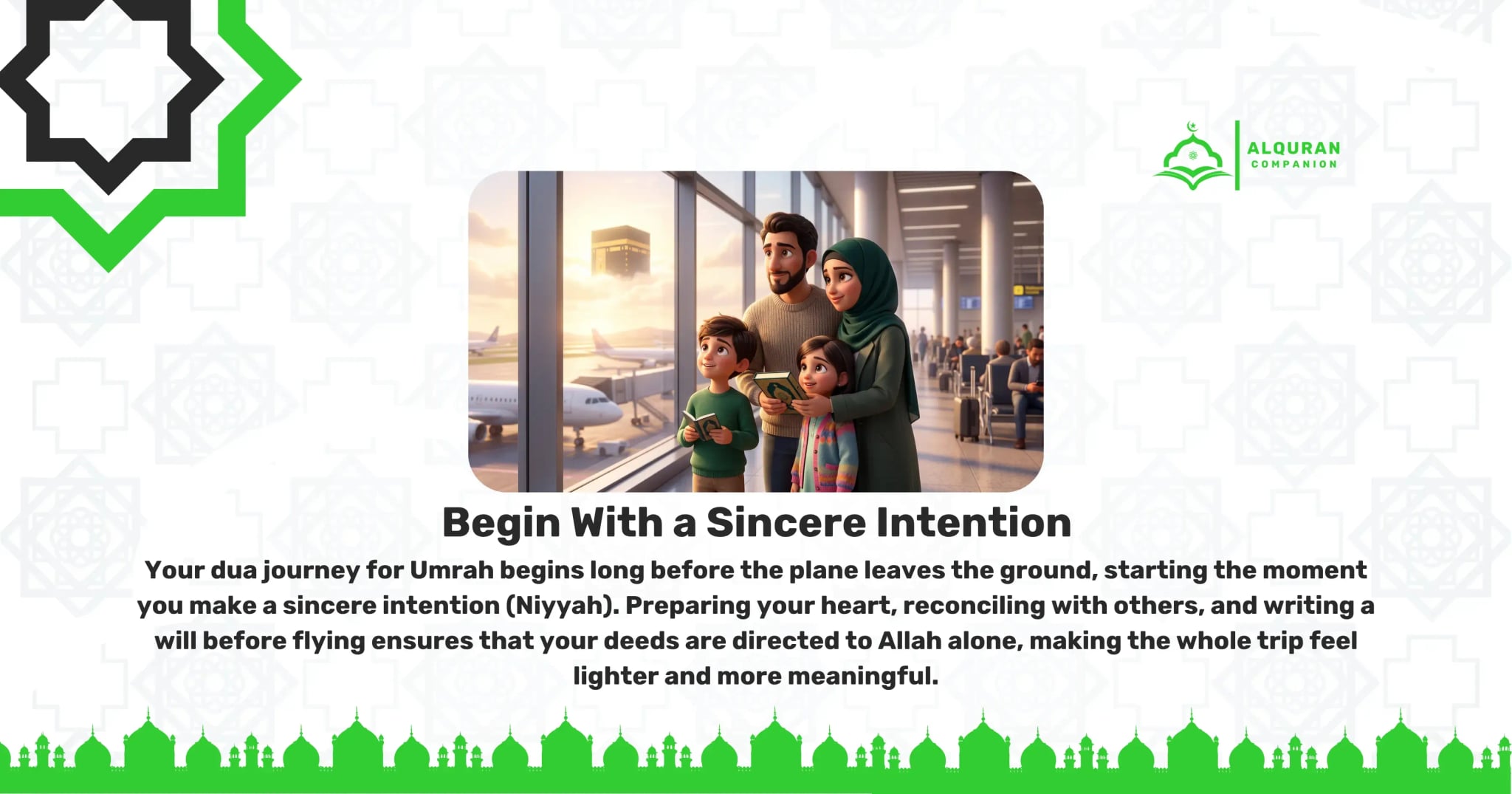
Preparing for Umrah or Hajj at Masjid al-Haram in Mecca requires both sound Fiqh knowledge and accurate Quranic recitation. Following the authentic Sunnah of Prophet Muhammad ﷺ recorded in Sahih Muslim (Hadith #1218), pilgrims must purify their intention, learn the rulings of Ihram and Tawaf, and master essential Duas before crossing the Miqat boundary.
- 1
Purify Your Intention (Ikhlas) and Repent Sincerely
Begin your preparation by making sincere Tawbah (repentance), resolving outstanding financial debts, and seeking forgiveness from family members so you enter the sacred Haram seeking only Allah's pleasure.
- 2
Verify Your Surah Al-Fatiha and Talbiyah Tajweed
Because every Tawaf concludes with a two-rak'ah Salah behind Maqam Ibrahim, book a diagnostic recitation check with an Ijazah-certified teacher to eliminate hidden pronunciation errors in Surah Al-Fatiha, Surah Al-Kafirun, and Surah Al-Ikhlas.
- 3
Master the Four-Madhab Rulings of Ihram and Miqat
Study the exact Miqat boundary your flight or train crosses (such as Dhul Hulayfah from Madinah or Qarn al-Manazil/Yalamlam/Juhfah by air) and review the prohibitions of Ihram according to your school of Fiqh.
- 4
Memorize Authentic Quranic and Sunnah Supplications
Prepare a personal list of heartfelt requests alongside authentic prophetic Duas, especially the supplication recited between the Yemeni Corner (Al-Rukn Al-Yamani) and the Black Stone (Surah Al-Baqarah 2:201).
- 5
Arrange Accredited Travel and Proximity Accommodation
Ensure your Umrah visa, flights, and hotel near the Masjid al-Haram courtyard are booked through an accredited, ATOL-protected operator so your family can conserve physical energy for worship.
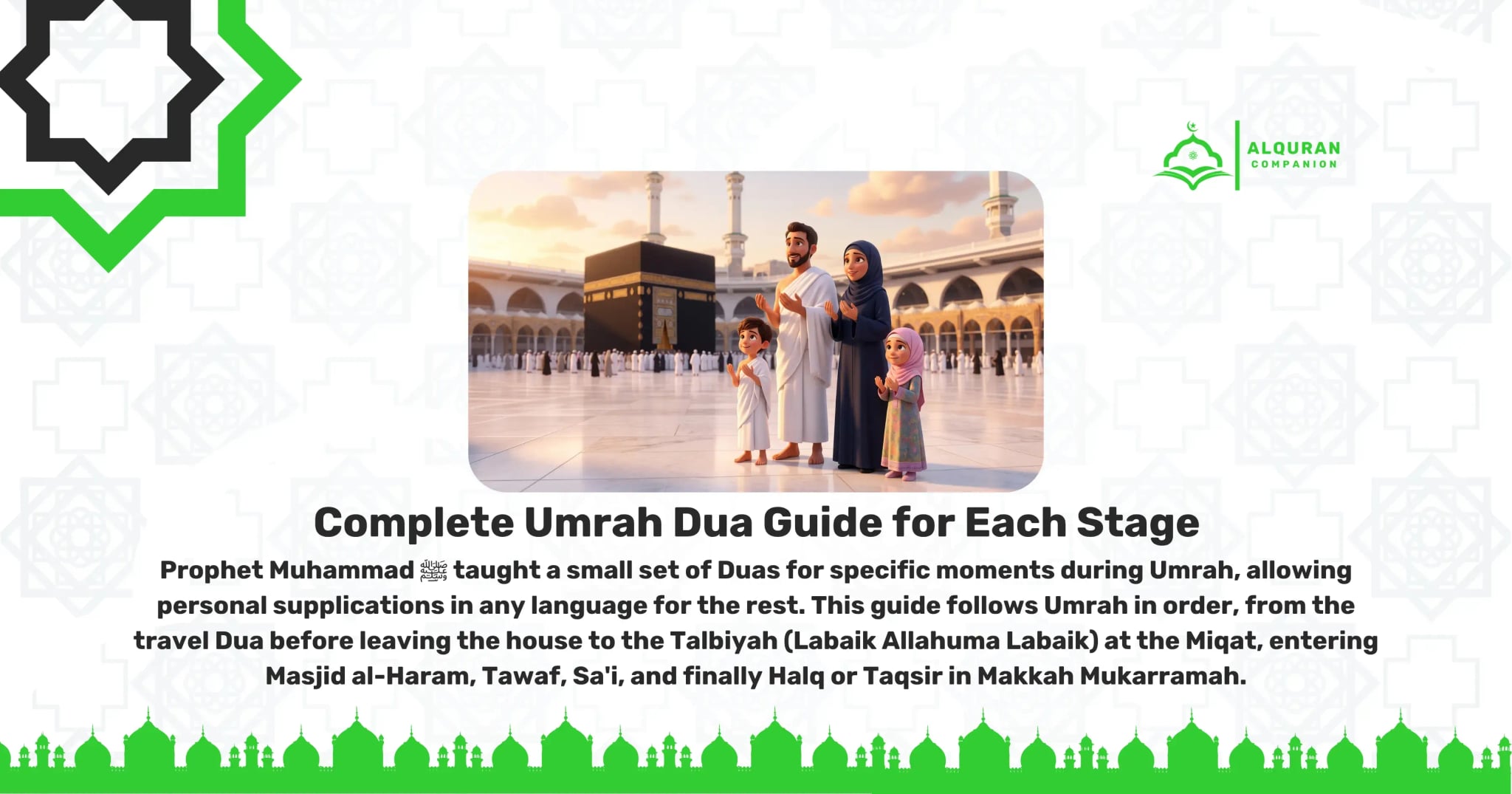
When performing Tawaf around the Kaaba inside masjid al-haram in mecca, the most authentic supplication taught by Prophet Muhammad ﷺ as he walked between the Yemeni Corner (Al-Rukn Al-Yamani) and the Hajar al-Aswad is the comprehensive Quranic Dua from Surah Al-Baqarah (2:201), recorded in Sunan Abi Dawud (Hadith #1892):
Dua Seeking Good In This World And In The Hereafter
rabbana atina fid-dunya hasanatan wa fil-akhirati hasanatan wa qina 'adhaban-nar
Our Lord! Give us good in this world and give us good in the Hereafter, and save us from the torment of the hell fire.
Conclusion: Preparing Your Heart and Journey to the Sacred City
Why is Makkah the holiest city in Islam? Because every single stone and valley around masjid al-haram in mecca testifies to unbroken devotion to Allah. From the moment prophet ibrahim (AS) and Prophet Ismail (AS) raised the stone walls of the Kaaba and Hajar (AS) ran with unwavering Tawakkul between Safa and Marwa as Zamzam gushed forth, to the birth of Prophet Muhammad ﷺ in the Year of the Elephant, the descent of the first Quranic revelation in Cave Hira, and the peaceful pledge of Hudaybiyyah, Makkah stands as the living heart of the Muslim Ummah.
Whether you live in London, Birmingham, New York, Toronto, Sydney, or Dubai, facing the Qibla five times a day is an invitation to eventually stand before the Kaaba yourself. For pilgrims in the UK planning to visit the holy city for Umrah, partnering with an experienced agency like Makkah Travel helps take care of your Umrah travel plans smoothly so you can step onto the white marble of Masjid al-Haram with a peaceful mind. And before you board your flight—or even if you want to bring the spiritual light of Makkah into your home today—prepare your heart and tongue by mastering Tajweed, Surah Al-Fatiha, and the Tafsir of the Makkan revelations with our background-checked male and female scholars at Al Quran Companion.
Frequently Asked Questions

Al Quran Companion Team
Verified AuthorThe official academic and editorial team at Al Quran Companion, a leading Online Quran Academy dedicated to simplifying Tajweed, Hifz, and Islamic studies for students worldwide.
Read more about author