Why Online Quran Classes for Kids Are Transforming UAE Education
Online Quran classes for kids in the UAE are live, one-on-one virtual lessons that connect students in Dubai, Abu Dhabi, and Sharjah with certified Ijazah-holding tutors worldwide. These sessions solve the logistics of the UAE's packed school week by bringing expert Quran education directly into the home.
The school run in Dubai is tough. By the time your child gets home from an international school in Al Barsha or Jumeirah, they are exhausted. The last thing they want is another commute to a physical Quran center. You have probably felt that tension.
For expat families, the solution is clear. Online Quran learning has moved from a niche option to a mainstream choice. Parents in the UAE are using it to access specialized English-speaking teachers who understand the demands of the British, IB, and American curricula. We have seen this shift firsthand at Al Quran Companion.
This guide gives you a practical roadmap. We will cover teacher vetting, the KHDA-aligned progression framework, and how to fit Quran study into a demanding academic calendar without causing burnout.
What You Will Learn
- Why Online Quran Classes for Kids Are Transforming UAE Education
- What Makes an Ideal Online Quran Teacher for UAE Expat Kids?
- The KHDA-Aligned Child Quran Progression Framework
- How to Assess Your Child's Quran Progress After 30 Days
- Balancing International School Homework with Quran Study in UAE
- Frequently Asked Questions About Kids Quran Classes in UAE
Key Takeaways
- Online Quran classes for kids in the UAE offer a flexible, home-based alternative to commuting to a physical madrasah or tutoring center.
- The KHDA-Aligned Child Quran Progression Framework maps four stages from Noorani Qaida to fluent recitation, aligning with UAE school Islamic Studies standards.
- Certified Ijazah-holding teachers with fluent English are essential for expat children navigating international school curricula.
- Balancing Quran memorization with school homework requires consistent, short sessions, not marathon weekend cramming.
- Free 1-on-1 diagnostic assessments allow parents to match their child with the right tutor before committing to a full course.
What Makes an Ideal Online Quran Teacher for UAE Expat Kids?
An ideal online Quran teacher for UAE expat children holds a verified Ijazah with an unbroken chain of transmission (Sanad), speaks fluent English, understands child psychology, and is familiar with UAE school Islamic Studies curricula. Ijazah is an authorization from a certified scholar that confirms mastery of Quranic recitation.
Not every Quran teacher is equipped for this specific job. You need someone who can teach Tajweed rules with precision while communicating in the language your child uses at school.
Before hiring anyone, you should know the critical questions to ask an online Quran teacher about their certification, teaching methodology, and experience with expat children. Ask for proof of their Ijazah. Look for a tutor who has taught students from international schools in Dubai or Abu Dhabi. A teacher who only knows the rote memorization style common in some regions may struggle with a child who is used to inquiry-based learning.
Safety is another non-negotiable factor. At Al Quran Companion, we conduct comprehensive background checks and detailed multi-stage reviews of every single teacher before they are certified to teach our students. For families seeking a female Quran teacher online for daughters, we provide certified female tutors who are experienced in teaching young girls and adult sisters. Parents can request a female teacher during the free trial booking process.
The KHDA-Aligned Child Quran Progression Framework
The KHDA-Aligned Child Quran Progression Framework is a four-stage roadmap developed by Al Quran Companion that maps Quranic milestones to the Islamic Education standards set by Dubai's Knowledge and Human Development Authority. The framework ensures that your child's Quran learning at home directly supports their performance in school Islamic Studies exams.
KHDA requires all Muslim students in Dubai private schools to follow the UAE Ministry of Education curriculum for Islamic Education. This includes non-Arab Muslim students, who are taught in English. The progression from Noorani Qaida to Quranic fluency is not just a spiritual journey. It is an academic one that affects grades.
The table below breaks down each stage. Use it to understand where your child currently stands and what comes next.
The KHDA-Aligned Child Quran Progression Framework: Four Stages
| Stage Name | Target Age | Key Milestones | UAE School Exam Alignment |
|---|---|---|---|
| Foundation (Noorani Qaida) | 4-6 years | Arabic letter recognition; Harakat and Sukoon; Connecting letters | Early Years Islamic Education foundation |
| Transition (Juz Amma Reading) | 6-8 years | Reading short Surahs from Mushaf; Basic Tajweed rules (Ghunnah, Qalqalah) | Lower Primary Quranic recitation assessments |
| Fluency (Nazirah) | 8-11 years | Fluent Quran reading; Applying Tajweed consistently; Understanding basic Tafsir | Upper Primary Islamic Studies exams |
| Mastery (Hifz & Tarteel) | 11+ years | Structured memorization; Beautiful recitation (Tarteel); Leading Salah | Secondary Islamic Education coursework |
Foundation (Noorani Qaida)
Transition (Juz Amma Reading)
Fluency (Nazirah)
Mastery (Hifz & Tarteel)
The ideal age to start Noorani Qaida is typically between four and six years old, when children are most receptive to phonetic learning. However, older children can still progress rapidly through the early stages with consistent practice.
Parents often ask us about the transition from the Qaida to the actual Quran. This is the stage where many students struggle. The visual shift from isolated letters to connected, vowel-heavy text can be overwhelming. Our certified instructors at Al Quran Companion use a structured Qaida-to-Quran transition method that starts with short, familiar Surahs from Juz Amma before moving to longer chapters.
How to Assess Your Child's Quran Progress After 30 Days
To assess your child's Quran progress after 30 days, you must check four concrete milestones: accurate Makharij in daily prayers, enthusiasm before class, the monthly tutor report, and retention of memorized verses. These markers tell you whether the classes are working.
Thirty days is enough time to see meaningful change, if you know what to look for. Here is a step-by-step assessment method:
- Confirm Accurate Makharij in Daily Prayers. Listen to your child recite a short Surah they know. Are the letters coming from the correct articulation points? Makharij al-Huroof refers to the specific places in the throat, tongue, lips, and nasal cavity where Arabic letters originate. If your child can pronounce 'Ha' (ح) and 'Kha' (خ) distinctly during Salah, the Tajweed instruction is sticking.
- Evaluate Your Child's Enthusiasm Before Class. A good teacher makes the lesson something to look forward to. If your child groans when you mention Quran class, something is wrong. The ideal indicator is a child who grabs their Mushaf and sits down without being told. At Al Quran Companion, we train our tutors in child engagement techniques that turn lessons into interactive sessions, not lectures.
- Review the Monthly Tutor Report. A professional online Quran academy provides progress reports. These reports should detail what was covered, where the child excelled, and where they need reinforcement. Look for specific feedback on Surah names, Tajweed rules, and areas of difficulty.
- Check Retention of Memorized Verses. Memorization is not a one-time event. Ask your child to recite verses they learned two weeks ago, not just yesterday. If they can recall Surah Al-Fatiha and Surah Al-Ikhlas without prompting, the Hifz routine is effective. Our tutors use spaced repetition cycles to lock in memorization.
Balancing International School Homework with Quran Study in UAE
Expert Insight
"In our live 1-on-1 classes, we frequently observe students who are exhausted from the UAE school day. A 30-minute high-focus Quran session after a snack is far more productive than a 90-minute session after dinner. The quality of attention matters more than the quantity of time. Our senior Ijazah-certified tutors recommend a daily 15-minute review schedule during school terms, supplemented by longer sessions on weekends. This approach prevents burnout and keeps the child engaged."
The UAE's four-and-a-half-day school week is a gift for family scheduling. Schools finish early on Fridays, and the weekend runs from Friday afternoon to Sunday. Parents can use this rhythm to their advantage. Friday afternoons, after Jumu'ah prayer and lunch, are perfect for a relaxed Quran session. Saturday mornings can be reserved for longer Hifz practice.
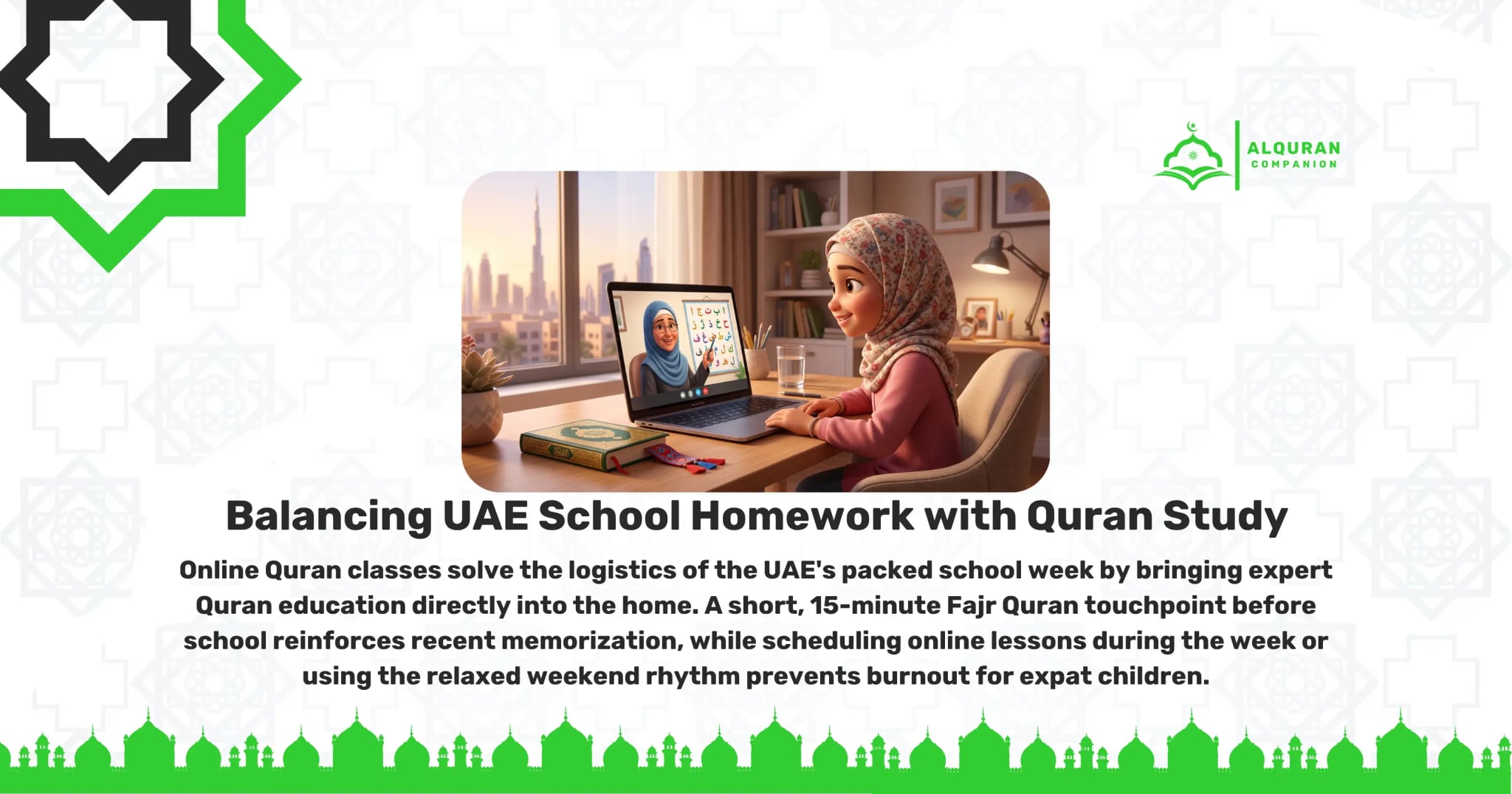
The mistake many families make is stacking everything on weekdays. A child who comes home from a British curriculum school in Dubai at 4pm, then has homework until 5:30pm, is in no state for intensive Quran study at 6pm. Instead, use a 15-minute Fajr Quran touchpoint before school. This short morning session reinforces recent memorization. Then, schedule two or three online Quran lessons during the week, each 30 minutes. Keep the weekend for revision and new Hifz targets.
This balanced approach also applies to families in other regions. The challenges of fitting Quran into a busy school schedule are universal. For a broader perspective on this, you can read our guide on balancing Hifz with school homework.
Frequently Asked Questions About Kids Quran Classes in UAE

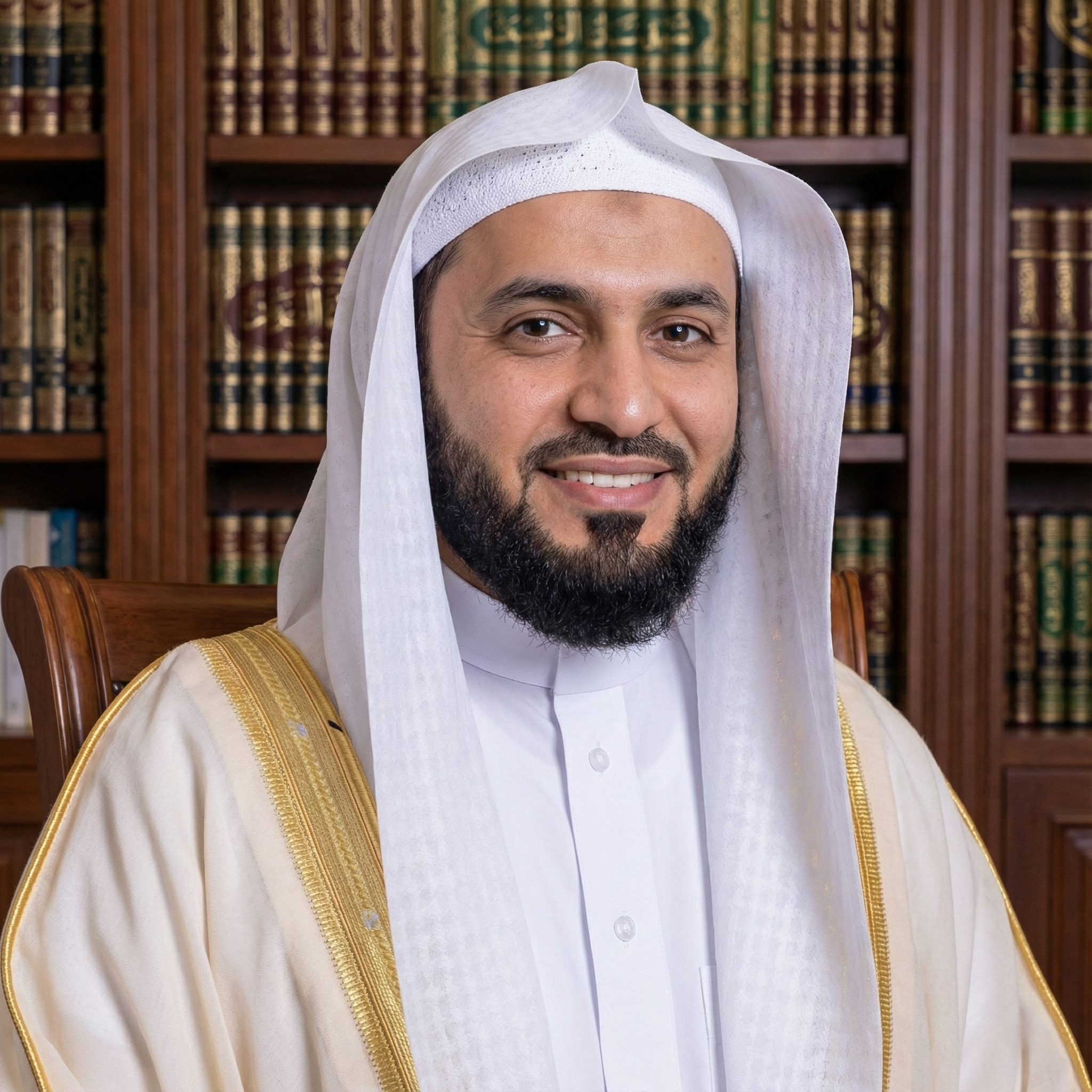
Sheikh Abdullah Al-Hanif
Verified AuthorSheikh Abdullah Al-Hanif is the Head of Education at Al Quran Companion. With over 15 years of experience in Tajweed and Hifz, he specializes in bridging the gap between classical Islamic tradition and modern digital pedagogy. He is passionate about making the Quran accessible to everyone—from energetic toddlers to busy professionals.
Read more about author